
Did you know that over 40% of first-time growers abandon their plots within the first season? It’s rarely about a lack of effort. More often, it’s because they felt utterly paralyzed by the planning stage.
I’ll be honest—when I first considered starting a vegetable garden, the sheer number of decisions was staggering. Do I need raised beds? How many tomatoes is too many tomatoes? What even is companion planting?
Here’s the thing: most gardening advice is written for people with seasons of experience. It’s not for folks just trying to figure out if their yard gets enough sun.
This guide is different. I’ve broken down the entire planning process into four manageable steps. I stripped away the overwhelming details and focused on what actually matters when you’re starting out.
The goal is to get you growing food, not to turn this into a second job. Whether you have a tiny balcony or a sprawling backyard, these steps will help you create a plan that fits your space, your time, and your actual life.
We’ll talk about choosing your site, picking plants you actually want to eat, sketching a simple layout, and optimizing without complexity. Think of it as gardening for real people who have other things going on.
By the end, you’ll have a clear roadmap. It takes you from “I want to grow vegetables” to “I have an actual plan that won’t overwhelm me.” Let’s get started.
Vegetable Garden Plan: A Beginner’s Overview
The most liberating truth about starting your own edible space is that there is no universal rulebook, only guidelines shaped by your reality.
I’ve seen two friends with the same 10×10 foot plot create completely different designs. One packed in neat rows of tomatoes and peppers. The other grew a lush mix of greens and herbs in solid blocks. Both had fantastic harvests.
Your layout shouldn’t copy a picture from a magazine. It must fit your specific space, sunlight, and soil. Honestly, it should also grow food you love to eat.
Think of it as part simple science and part creative puzzle. The science? Plants need certain hours of sun and room to grow. The creativity? Figuring out how to fit everything into your oddly-shaped yard or balcony.
The table below breaks down the core factors that shape a successful design:
| What Limits Your Choices | Where You Get Creative |
|---|---|
| Available Space & Sunlight | Choosing Which Plants to Grow |
| Native Soil Quality | Using Trellises & Vertical Space |
| Time You Can Commit Weekly | Pairing Compatible Crops Together |
| Local Climate & Season Length | Planning Succession for Continuous Harvest |
This overview gives you the framework. The coming four-step process applies these principles. It helps you build a confident plan without every overwhelming detail.
Selecting the Ideal Garden Site
Location, location, location isn’t just a real estate mantra; it’s the golden rule for growing food. This step decides whether your plants thrive or merely survive.
I treat picking a spot like scouting for a campsite. You need good light, water nearby, and no hidden dangers.
Assessing Sunlight and Water Access
Most edible crops are total sun-worshippers. They crave 6 to 8 hours of direct light daily. The south, east, and west sides of your home usually win the sunshine lottery.
Here’s a pro tip I learned the hard way: place your plot where you’ll see it. Near a door you use often. “Out of sight, out of mind” is real when your plants get thirsty.
Water access is unglamorous but critical. You do not want to haul a hose across the yard in July. Pick a space with easy access to a spigot.
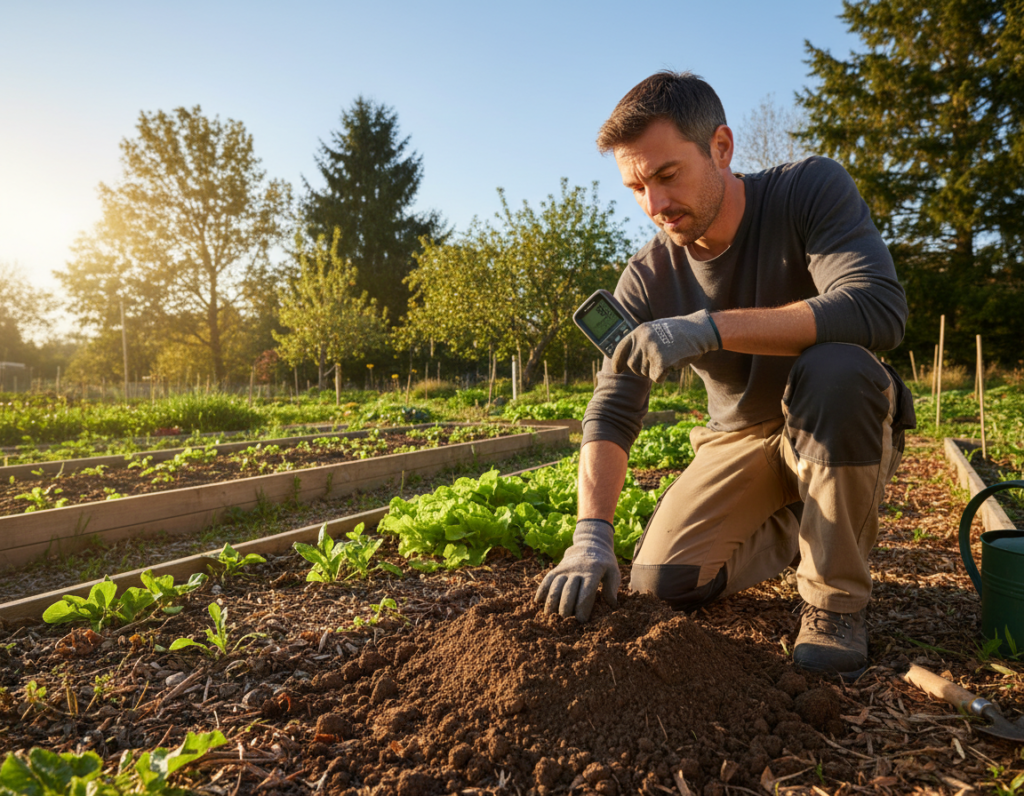
Considering Soil and Surrounding Vegetation
Take stock of the neighbors. Large trees and shrubs are resource hogs. They compete for soil nutrients, moisture, and that precious sun.
Steer clear of walnut trees. They produce juglone, a toxin lethal to many vegetables.
Your native soil matters too. Is it rocky or compacted? Noting this now helps you decide between in-ground planting or raised beds later.
Spend a day observing your potential area. Watch where light and shadow fall. This simple reconnaissance saves so many headaches.
Listing Your Favorite Vegetables and Crops
I made a rookie mistake my first year: I planted a bunch of ‘easy’ crops I never actually ate. This step is where your edible space becomes truly yours.
Start by grabbing a notepad. Think about your weekly meals. Do you live for fresh salsa? Then tomatoes, peppers, and cilantro are non-negotiable. Stir-fry fan? Prioritize snap peas and bok choy.
Let your appetite, not a generic “beginner list,” drive your choices.
Prioritizing What You Love to Eat
Be brutally honest. If no one in your house touches radishes, don’t grow them. Your available space will force some tough calls.
Vining plants like cucumbers can climb a trellis, saving precious ground. Giant pumpkins? Maybe not for a small patio.
Also, note any perennial favorites like asparagus. They need a permanent home, separate from your rotating annual crops.
Understanding Companion Planting Basics
This topic is full of gardening myths. Ignore the hype about marigolds fixing everything.
Focus on smart pairings that save room. My go-to is sowing quick radishes with slow carrots. You harvest the radishes early, which naturally thins the area for the carrot roots to expand.
It’s a simple, efficient trick that makes your planting more productive.
Sketching Your Garden Layout on Paper
Think of graph paper as your low-stakes rehearsal stage before the main gardening event. I know it feels like homework, but spending 30 minutes now saves hours of frustration later.
Grab a sheet and use a simple scale: one square equals one foot. Sketch your plot’s dimensions based on your site measurements. This lets you erase and rearrange endlessly.
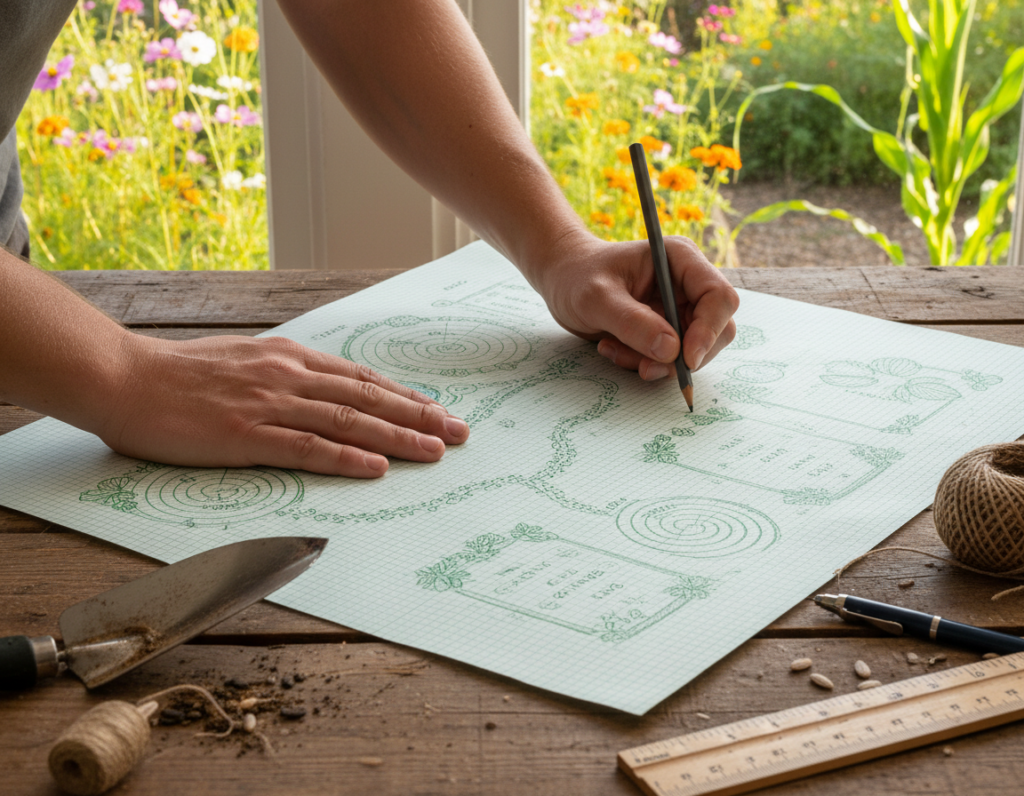
When drawing your beds, keep them 3 to 4 feet wide. You’ll reach the center without stepping in and compacting the soil. Leave generous pathways between them for a wheelbarrow.
| Aspect | Do | Don’t |
|---|---|---|
| Bed Width | Limit to 3-4 ft for easy access. | Create beds too wide to reach across. |
| Pathways | Allow room for a cart or wheelbarrow. | Squeeze paths so tight you can’t move. |
| Plant Placement | Sketch tall plants at the back (north side). | Place sun-lovers where they’ll be shaded. |
| Mindset | Use pencil and stay flexible. | Strive for a perfect, permanent sketch. |
Arrange your plants in layers. Put tall ones like tomatoes in the back. Place mid-sized crops in the middle. Tuck low-growing herbs and greens in front.
Your paper layout is a working document, not a final exam. Light pencil marks mean you can adapt as you learn.
Designing Raised Beds, Containers, and Square-Foot Gardens
Forget fighting with clay or rocks. There are smarter ways to set up your growing area. Raised beds, containers, and the square-foot method solve common beginner headaches.
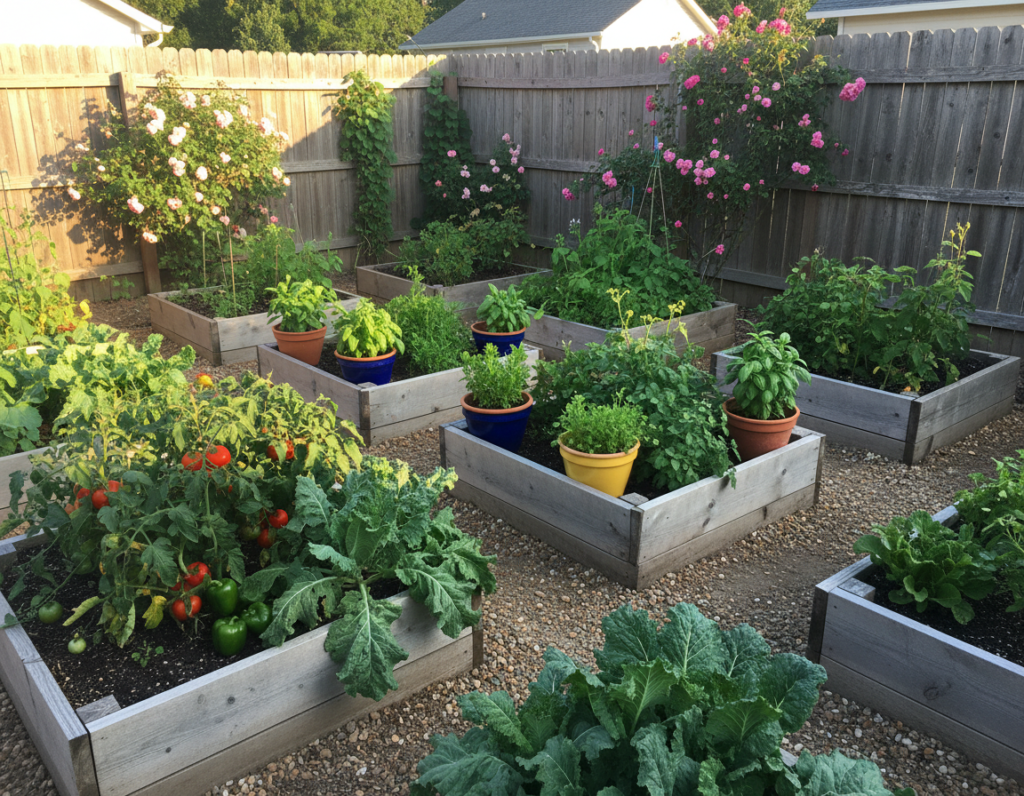
Exploring the Advantages of Raised Beds and Containers
Raised beds are simple frames you fill with quality soil. This setup offers serious perks. Your soil drains better and warms up faster in spring.
These beds create a controlled soil environment. It’s perfect if your native ground is terrible. You’re essentially building good dirt from scratch.
They also make planting and weeding easier on your back. A raised bed brings the crops up to you.
Container gardening is the ultimate solution for patios and balconies. Use pots, grow bags, or planters instead of traditional beds.
The beauty of containers is their flexibility. You can move them to chase the sun. You can also arrange them creatively in a small space.
Square-foot gardening takes the raised bed concept and adds a grid. You divide the bed into one-foot squares for dense planting.
Each approach has trade-offs. Raised beds need an upfront build. Containers dry out faster. But all three offer helpful constraints that simplify decisions for a new garden.
You can even mix them. Try a couple of raised beds for tomatoes, with containers of herbs on the deck. Your garden should work for you.
Embracing Vertical Gardening Techniques
What if you could double your growing area without taking up a single extra square foot of ground? This isn’t a magic trick—it’s vertical gardening. Most beginners stare at the soil and forget the sky’s the limit.
Vertical gardening means training plants to grow up, not out. It’s a total game-changer for small plots. You free up precious ground space for other plants.
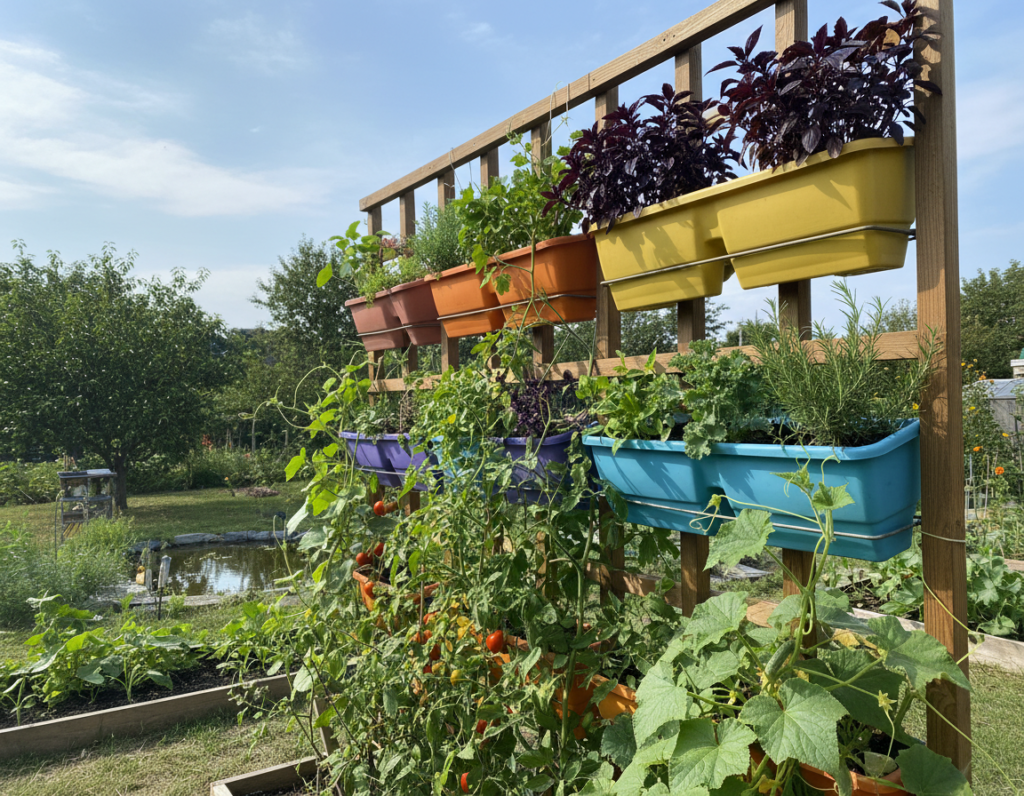
Incorporating Climbing Plants and Trellis Ideas
Many vegetables are natural climbers. Beans, peas, and cucumbers will happily scale a support. Give them a trellis, and they soar skyward.
You can get creative with structures. Try a simple bamboo teepee or a sturdy wire mesh panel. A wooden A-frame is my go-to for vining crops.
The smartest part? Use the shade they create. Plant leafy greens underneath. They’ll thank you for the relief during the hot summer.
| Structure Type | Best For | Key Perk |
|---|---|---|
| Simple Teepee | Pole beans, peas | Quick setup, great for containers |
| Wire Mesh Panel | Cucumbers, Malabar spinach | Maximum surface area for vines to grip |
| Wooden A-Frame | Squash, runner beans | Creates a shaded under-story for other planting |
Don’t forget tomatoes. They need strong cages or stakes. Proper support keeps fruit off the ground and boosts your yield.
This approach makes picking easier. No more crawling to find hidden produce. Better air flow also helps prevent disease in your garden.
Maximizing Space with Dense Planting and Thinning
Ever feel like those seed packet instructions are written for someone with a tractor and a hundred acres? Here’s the dirty little secret: those spacing recommendations are for commercial farms. They’re not for you trying to squeeze every edible bit from your small plot.
I embrace dense planting. This means putting seeds and plants much closer together than the packet says. Most crops tolerate tight spacing beautifully, especially if you’re willing to harvest some early.
Effective Seed Scattering and Thinning Tips
For crops like carrots and lettuce, I scatter-seed blocks. I sprinkle seeds over a bed area at roughly the density I want. It’s not an exact science. Some will land too close, some with more space.
Yes, you use more seed. But you save time and get way more food from the same area. The magic happens when those plants start growing.
This is where thinning becomes your friend. Where plants are too crowded, you pull the extras. The beautiful part? Those thinnings are delicious baby harvests. Thin carrots for baby carrots. Thin beets for tender beet greens.
View thinning as “harvesting a bonus crop,” not extra work. This approach works especially well in raised beds and square-foot setups. The rich soil supports the higher plant population.
Interplanting and Crop Pairing Strategies
I used to think companion planting was all about marigolds and myths. Then I tried the radish-carrot combo. Let’s be real—this is the actually works kind of magic.
Interplanting means growing two or more crops together in the same spot. The secret? Pair plants that mature at wildly different speeds.
You harvest the fast one early. This frees up space for the slower one to take over. It’s a total win-win for your garden.
The poster child is radishes with carrots. Scatter both seeds together. Radishes are ready in about a month.
When you pull them, you naturally thin the area. Their taproots even aerate the soil for the baby carrots. Genius, right?
| Fast Crop | Slow Crop | Why It Works |
|---|---|---|
| Radishes | Carrots | Quick harvest frees space; roots loosen soil. |
| Lettuce | Tomatoes | Salad greens mature before tomatoes need the room. |
| Spinach | Peppers | Leafy greens finish as pepper plants start fruiting. |
| Peas (Spring) | Beans (Summer) | Cool-season crop makes way for warm-season one. |
This strategy works across the season too. Follow spring peas with summer beans in the same bed.
Ignore the folklore. Focus on the practical, space-saving benefit. Your goal is a continuous harvest with no bare soil.
Creating Efficient Pathways for Easy Garden Access
Here’s a design secret: you can grow more food without touching a single seed packet. The trick is to stop giving so much of your precious area to walkways.
Pathways can devour a shocking amount of real estate. You need easy access, but there are smarter and dumber ways to design them.
Minimizing Space Waste with Smart Path Designs
The old-school method uses long paths between parallel beds. This often wastes space. Instead, try shorter, dead-end paths.
Imagine a keyhole shape curving into a planting block. You reach all your plants but dedicate less square footage to walking.
Functional width is non-negotiable, though. You must kneel, bend, and ideally push a wheelbarrow. Trust me, a too-narrow path is pure frustration.
| Path Use Case | Ideal Width | Key Consideration |
|---|---|---|
| Main Walkway (Foot Traffic) | 18-24 inches | Comfortable for walking with a harvest basket. |
| Primary Haul Route | 36 inches | Essential for wheelbarrow or cart access. |
| Secondary Access Path | 12-18 inches | Minimizes space for quick checks and weeding. |
Use different widths strategically. Have a wide main artery for hauling compost. Use skinnier paths for routine bed access.
Your path material also matters. Wood chips, straw, or gravel suppress weeds. This keeps your walkways from becoming extra work.
When finalizing your layout, do the math. If paths consume over 30% of your total garden area, you can optimize. Reclaim that space for growing.
Adapting Your Layout for Seasonal Success
The biggest upgrade to your edible space isn’t a new tool—it’s learning to think in seasons. I used to treat my planting schedule like a springtime tattoo. Once it was on paper, that was it for the year.
That’s a rookie mindset. Your plot should be a dynamic stage, hosting different performers from spring through fall. Smart growers don’t let any soil sit idle.
Implementing Succession Crops and Transitions
Succession planting is the magic trick. As one crop finishes, you immediately slot another into its space. This keeps the harvest rolling all season long.
Start with cool-weather champions like lettuce and peas in early spring. When they bow out in late May, heat-lovers like beans or cucumbers take the stage for summer.
Timing is everything. You must know roughly when your spring crops will finish. Have your summer seeds or transplants ready to go. Any gap is wasted growing time.
Some plants are brilliant bridge crops. Plant garlic in the fall, harvest it mid-summer, then use that space for quick-growing rapini. Your garden works overtime.
Jot succession notes right on your layout sketch. Plan the year in three acts: spring, summer, fall. This turns a single harvest into a continuous buffet from your backyard.
Exploring Diverse Garden Layout Styles
The farm-style row layout is like using a semi-truck to go to the grocery store: overkill for a small plot. Your edible space isn’t a farm. It’s a personal food factory. The style you pick shapes your entire growing experience.
Traditional Rows Versus Solid Blocks
Long, single-file rows make sense for tractors. They waste precious ground in a backyard. Block planting groups crops densely in wide beds. You fit more plants per square foot.
Some crops still suit rows. Think staked tomatoes or potatoes. A hybrid approach often works best.
Kitchen Garden and Container Options
A potager or kitchen garden blends food with beauty. It uses geometric beds near your home. You mix herbs, edible flowers, and favorite vegetables.
Container layouts are perfect for patios. Group pots by their sun and water needs. This makes care a breeze.
You can mix all these styles. Your layout should reflect how you want to interact with your plot.
Fine-Tuning Your Garden for Optimal Growth
What if your most valuable tool wasn’t a trowel, but a simple notebook? Your first edible space is a living lab. The goal isn’t a flawless layout but smart observation.
Celebrate what works. Then, tweak what doesn’t. This fine-tuning turns a good plot into a high-yield, low-stress system.
Monitoring Plant Health and Adjusting Spacing
Watch your plants like a detective. Are they leaning hard for light? That spot gets less sun than you thought. Note to move sun-lovers next year.
Pale, stretched plants scream for more light. Swap them for shade-tolerant greens like spinach. If lettuce wilts in afternoon sun, provide shade cloth.
Moisture tells its own story. Some areas dry out fast. Others stay soggy. Match water-hungry plants to damp zones next season.
Crowding is a silent thief. Plants compete for nutrients, water, and air. If they look cramped, thin them out—even mid-season.
Your notes are gold. Which tomato tasted best? Which bean produced most? Jot it down. This data shapes next year’s gardening wins.
Embrace the experiment. Your local soil, weather, and light are unique. Keep adjusting. That’s how you master your garden.
Conclusion
Let’s be real: the hardest part of growing your own food is often just getting started. You now have a simple, scalable framework to do it.
Trust me, your first year won’t be flawless. Mine wasn’t, and plenty of experienced gardeners say the same. But a solid layout dramatically boosts your chances of success. More importantly, it keeps the gardening process enjoyable, not overwhelming.
Your initial plan is a starting point. It will evolve over time as you learn your space and which plants you love. That’s the whole point.
Don’t get stuck perfecting every detail. You’ll learn more from one season of actual growing than from months of research. Get those seeds in the ground. Welcome to the deeply satisfying world of growing your own vegetables. Your garden adventure starts now.
