
Here’s a fact that might surprise you: by 2026, it’s estimated that urban balconies and patios could supply nearly 15% of a household’s fresh herbs and vegetables. That’s not science fiction; it’s the new reality of gardening.
This shift is getting a major spotlight. At the 2026 RHS Chelsea Flower Show, horticulturist Frances Tophill is designing ‘The Curious Show Garden’—with support from Sir David Beckham, no less—specifically to inspire folks with limited space. The core idea? A few key principles in planning can make a tiny garden feel expansive, not cluttered.
I’ve watched this trend evolve, and 2026 is truly the year your tiny balcony graduates from being a hospice for a sad basil plant to a legitimate food production zone.
The truth is, you don’t need acres. You need smart planning, the right techniques, and a willingness to think vertically (both literally and, okay, metaphorically).
This guide will walk you through maximizing every inch, even incorporating some almost foolproof automated systems. (I’m skeptical of tech for tech’s sake, but some of these actually save time).
We’re talking about transforming your limited outdoor space into a functional, beautiful area that actually feeds you. It’s about more than just decor.
Whether you have a cramped balcony, a postage-stamp patio, or just a sunny windowsill, you can make it work. By the end, you’ll know how to balance design with production and use vertical solutions creatively.
Let’s dive into the practical strategies to build a productive garden you can actually be proud of.
Designing a Functional Small-Space Garden
The secret to a functional tiny garden lies in a counterintuitive approach: sacrifice some floor space to gain visual space. It feels wrong, I know. But cramming pots onto every inch of your patio makes it look cluttered, not productive.
Maximizing Planting Areas and Layout
Expert advice is clear. Aim for a 50-50 balance between your planting areas and hard surfaces like decking. This is the sweet spot. Your garden feels lush without swallowing your chair.
When working with a small footprint, use larger pavers. They make the patio feel more expansive than a mosaic of small blocks. It’s an optical illusion that works.
Don’t be shy about making your planting beds deeper, either. Generous beds create an illusion of abundance. Narrow strips just highlight the limited size.
Balancing Color Schemes and Design Elements
Color psychology is your friend here. Cool colors like blues and purples seem to recede. Using them in your plants tricks the eye into seeing more depth. Hot reds and oranges do the opposite.
Choose light-colored materials for your paving. They bounce light around, creating an airier feel. This is a game-changer for a shady area.
The final design trick? Guide the eye. Use a gentle curve in your path or a strategic focal point. This breaks up linear sightlines that scream “small garden.” It’s the best way to make your space feel intentional and larger.
Creative Container Gardening and Vertical Solutions
When floor space is a luxury, the only direction left to grow is up. This is where creative container gardening becomes your best friend. I’ve learned to treat walls and railings as prime real estate.
Thinking vertically isn’t just a trend; it’s a necessity for a serious food grower. You can multiply your yield without needing more square footage.
Utilizing Hanging Baskets and Planters
Hanging baskets have leveled up. You can use them for cherry tomatoes, strawberries, or herbs. They free up your patio floor completely.
For shallow-rooted veggies like spinach, these containers are perfect. It’s an inexpensive hack that adds greenery to a bare fence or shed wall.
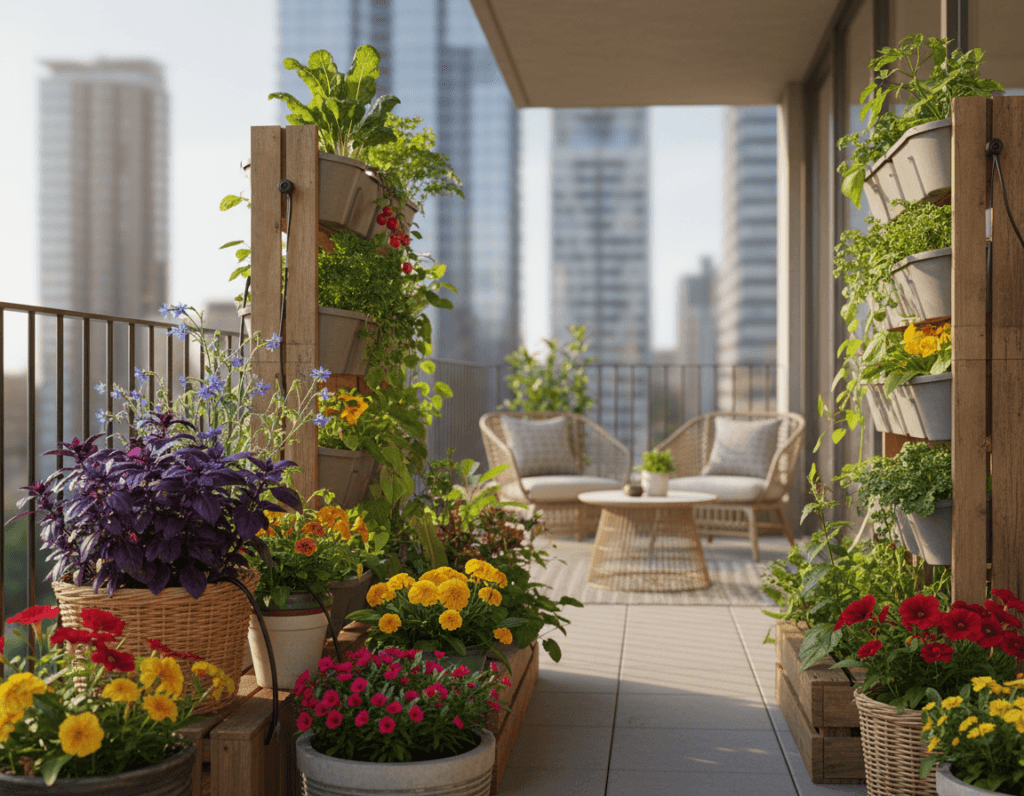
I also recommend tiered, ladder-style stands. They let you stack pots vertically. It’s the bunk bed solution for your plants.
Installing DIY Green Walls for Extra Growth
Don’t let a blank fence go to waste. A simple DIY green wall is easier than you think. Attach a frame with pockets to a fence and fill it with herbs or salad leaves.
This transforms a boundary into a lush, edible display. For privacy, train fast-growing vines like black-eyed Susan on a trellis. You solve two problems at once.
The key is to think three-dimensionally. Your planting area is everything from the ground up to where your watering can reaches. One large statement container often looks better than a dozen small ones. It creates a focal point and saves precious ground space.
Raise containers on shelves or walls. This simple move instantly gives you more room to plant and makes your tiny garden feel thoughtfully designed.
Growing Serious Vegetables and Herbs in Limited Space
I’ve killed more plants by choosing the wrong varieties for a pot than by any watering mistake. The truth is, growing vegetables on a tiny plot is a different game. You need crops that actually thrive in confinement and give you a quick return.
Selecting Compact and Fast-Growing Varieties
Fast growers are your best friends. Think spring radishes ready in four weeks or spring onions in eight. You’re harvesting real food, not just watching leaves.
For climbing vegetables that save ground, try runner beans or French beans like ‘Blauhilde’. Squash ‘Tromboncino’ can scramble up a trellis, too.
I’m a convert to successive sowing. Plant salad seed in one container, then another two weeks later. This trick creates a continuous supply from a minimal area.
Herbs are the gateway drug to serious food gardening. Grow them in window boxes or mounted jars. Having fresh basil steps from your kitchen changes everything.
Skip the space hogs like pumpkins. Focus on compact varieties bred for pots. A mixed potager-style bed with vegetables, herbs, and flowers is both beautiful and practical.
Incorporating Innovative Garden Design Tips
Forget trying to cram in one of everything—the most stunning small gardens are built on restraint and repetition. The best design ideas often come from studying large, professional gardens or flower shows. Their core principles scale down perfectly to a tiny patio.
You can use these concepts to make your space feel larger and more intentional. It’s about clever perception, not square footage.
Using Cool Colors to Enhance Perception
Color is a powerful tool. Cool-toned flowers and foliage create an illusion of depth. Blues, purples, and silvery greens seem to recede visually.
Planting them towards the back of your garden makes the area feel longer. It’s a simple trick that adds a lot of perceived space.
Implementing Repetition and Focal Points
Repetition is the secret to a polished style. Instead of buying single specimens, get three of the same plant or container. Repeating this element creates rhythm.
Limit your plant palette. Choose five or six favorites and repeat them. This looks cohesive, not chaotic.
Always establish a focal point. One large, beautiful pot has more impact than a dozen small ones. It gives your design instant structure.
Break up boxy layouts. Use a curved border or circular paving to draw the eye. Dividing your area with a low screen also helps. You can’t see everything at once, which makes the garden feel more interesting and larger.
This way of thinking transforms a simple planting project into a thoughtful, professional-looking retreat.
Smart Space Planning with Multifunctional Furniture
Let’s talk about furniture—specifically, how to choose pieces that don’t eat your entire patio for breakfast. When you’re working with a tiny outdoor area, every item must earn its keep by pulling double or triple duty.
Built-in seating is the holy grail here. A bench with storage underneath gives you a place to sit and a hidden spot for tools. This clever way to declutter keeps your home for plants looking tidy.
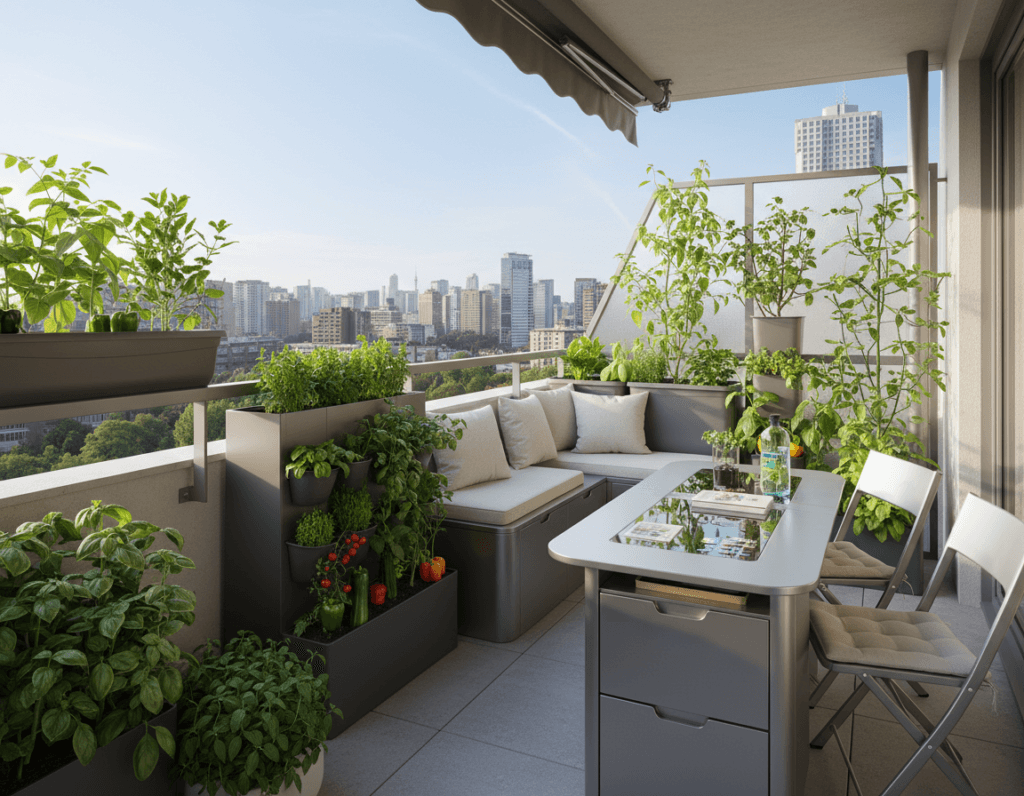
Use a corner bench against a boundary. It capitalizes on dead space and frees up the center of your patio. Now you have room for containers and actual movement.
Table size is critical. A 48-inch table comfortably seats four but leaves ample room. You can still fit standing space for guests and a container or two.
Swap individual chairs for benches on at least one side. This simple hack lets more people gather without adding extra furniture. Your area feels less cluttered instantly.
Don’t forget vertical storage. Attach jar lids to the underside of a shelf with screws. Screw the jars in to hold string or plant labels. It’s a genius way to use every inch.
Embracing Future Trends for 2026 Gardens
What if your balcony could practically water itself while you’re on vacation? That’s the promise of 2026 gardening tech. The trends are about working smarter, not harder. I don’t have time to hand-water twenty pots every day.
Sustainable Lighting and Irrigation Options
Adding light to your garden is simple. Solar-powered spotlights are surprisingly good now. You just stick them in a pot.
For a cozy vibe, use fairy lights. Pick warm yellow tones over harsh white. It’s better for wildlife and your evening mood.
For irrigation, a drip system is a game-changer. Brands like WaterWise make kits for vertical setups. Set it up once in spring, and your plants get consistent water.
Automated Systems for Efficient Maintenance
Automation goes beyond watering. Systems can feed plants and monitor soil. This means less maintenance time and more enjoyment at home.
The sustainability angle is real. Using solar power saves a lot of effort. Investing a little now pays off later.
Looking ahead to spring planting, even dwarf trees in containers benefit. This makes small-space gardening more practical and fun.
Expert Insights from Urban Garden Inspirations
What do a Brooklyn backyard and a Houston balcony have in common? They both prove that limited square footage is no excuse for a boring garden. I love looking at professional designs—not to copy them exactly, but to steal the principles that make them work.
The best garden ideas often come from adapting big concepts to your own compact area.
Lessons from the RHS Chelsea Flower Show
The 2026 Chelsea Flower Show is putting small space gardening front and center. Frances Tophill’s ‘Curious Show Garden’ (yes, backed by Beckham) is designed to inspire new growers.
Its core message? A tiny balcony doesn’t disqualify you from real planting. It just demands more creativity.
Advice for Limited Patios and Balconies
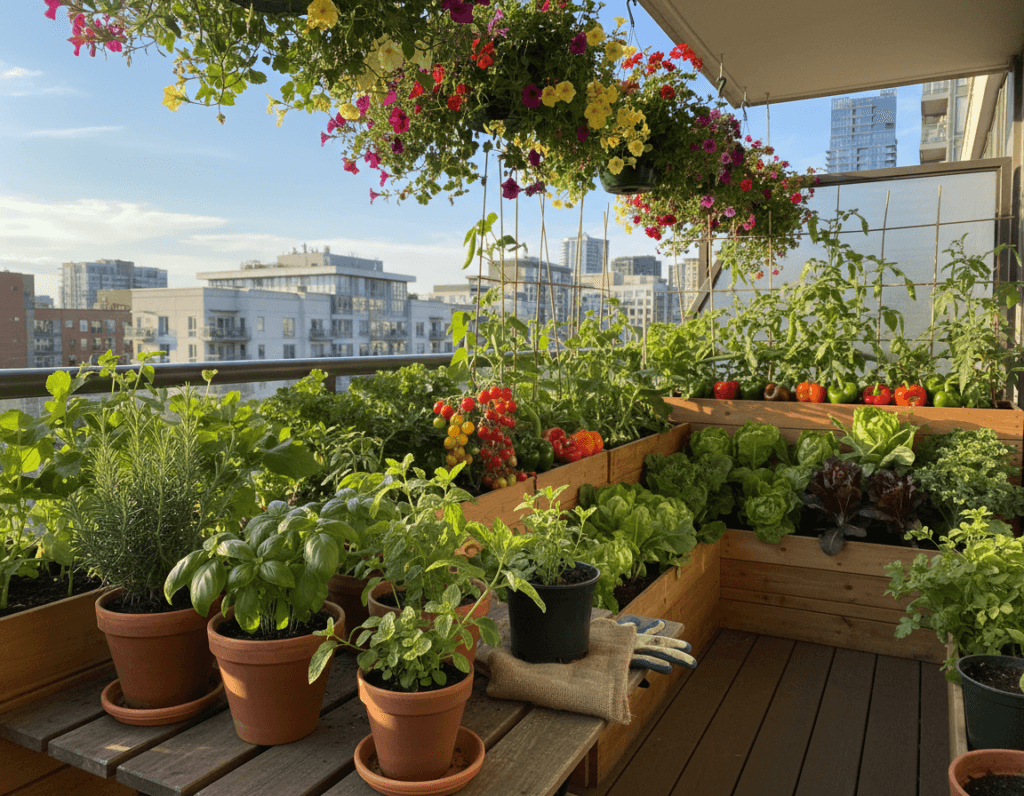
Take a cue from a Houston small garden. Mix tall potted trees with low bushes and tabletop herbs. This layering creates instant depth and interest in a tiny space.
In Brooklyn, stone pavers set in gravel transformed a yard. Greenery encompassed everything from the fence up. It shows how to make a small garden feel lush and intentional.
Even traditional topiaries offer a lesson. They provide year-round structure without swallowing your patio. The key from all these expert gardens is simple: be intentional. Every plant, pot, and paver must earn its spot.
That’s how you build a garden with serious style, not just a collection of pots.
Small-Space Gardens: Essential Tips for Serious Food Growers
If you’re serious about food production, stop thinking horizontally and start looking up. Your walls and fences are prime real estate, not just boundaries. I love treating them as a blank canvas for edible plants.
Maximizing Vertical Space with Climbing Plants
Climbers are the ultimate hack. They grow up, not out, saving precious ground space. For sunny spots, try clematis or jasmine. Shady, north-facing walls are perfect for climbing hydrangea or ivy.
Trained fruit trees sound fancy, but they’re genius for tiny plots. Espaliers and fans flatten against a wall. Cordon apples grow vertically, letting you pack more varieties in.
The secret is compact rootstock. An M27 apple tree stays around 1.5 meters tall. You can grow apples on a balcony without creating a forest.
Container-grown fruit trees are totally viable. Choose varieties that thrive in pots, like Cherry ‘Stella’ or Apple ‘Fiesta’. Just be ready for more diligent feeding and watering.
My best ideas often involve multi-season plants. If you only have space for one tree, make it count. An Amelanchier gives you spring flowers, summer berries, and fall color.
This approach to planting transforms your gardening from a hobby into a real food source. It’s about working smarter with the vertical plane you already own.
Balcony Makeovers: Transforming Limited Outdoor Areas
Let’s be honest: most balconies are architectural afterthoughts, but that doesn’t mean they have to feel that way. A clever makeover can turn even the tiniest ledge into a functional extension of your home. I love this challenge because it’s where creativity really shines.
Creative Use of Paving, Seating, and Storage
The way you handle the floor sets the tone. Laying rectangular pavers horizontally makes a narrow balcony feel wider. Light-colored materials bounce light, fighting that cramped feeling.
Storage is your secret weapon. Built-in benches hide tools, and wall-mounted shelves keep containers off the floor. Designer Corey Damen Jenkins propped mini pots on a shelving unit, keeping the livable room clear. It’s a game-changer.
Don’t forget your kitchen window. A simple window box lets you grow herbs steps from your stove. For a shady patio, plants like hostas and ferns thrive. One type of flower at your front entrance creates big impact with less work.
The secret? Embrace your size. Use gravel instead of lawn for more planting room. A fresh coat of paint on a gate makes a budget-friendly statement. These small touches make your space feel intentional, not cramped.
Conclusion
The real magic happens when you stop seeing limits and start spotting opportunities. You now have the ideas to turn any ledge into a lush, productive area.
The core principles are simple. Think vertically to save floor time. Choose compact varieties that work in containers. A fruit tree in a pot or vines on a wall can yield a serious harvest.
Spring is the perfect moment to begin. Grab some seed packets and pots. Start with a few plants and see what thrives. The beauty of this style of gardening is its flexibility. You can move things around until it clicks.
Your journey towards a tiny, food-producing garden starts now. With a little planning, you can grow a lot more than you think.
