
The days of “cracking the algorithm” are over. Today’s AI-powered search engines don’t just read content; they understand it, predict what users want, and deliver answers before users even finish typing. If you’re still optimizing for 2022’s SEO playbook, you might as well be using a flip phone in the age of neural implants.
But here’s the good news: I’ve been experimenting with cutting-edge AI SEO strategies that are working right now and will continue to work as we move toward 2026. In this guide, I’ll share exactly how to leverage predictive AI, optimize for zero-click searches, and create content that satisfies the increasingly complex ways users interact with search engines.
Buckle up—the future of AI SEO is already here, and it’s wildly different from anything we’ve seen before.
Mastering Predictive AI for User Intent
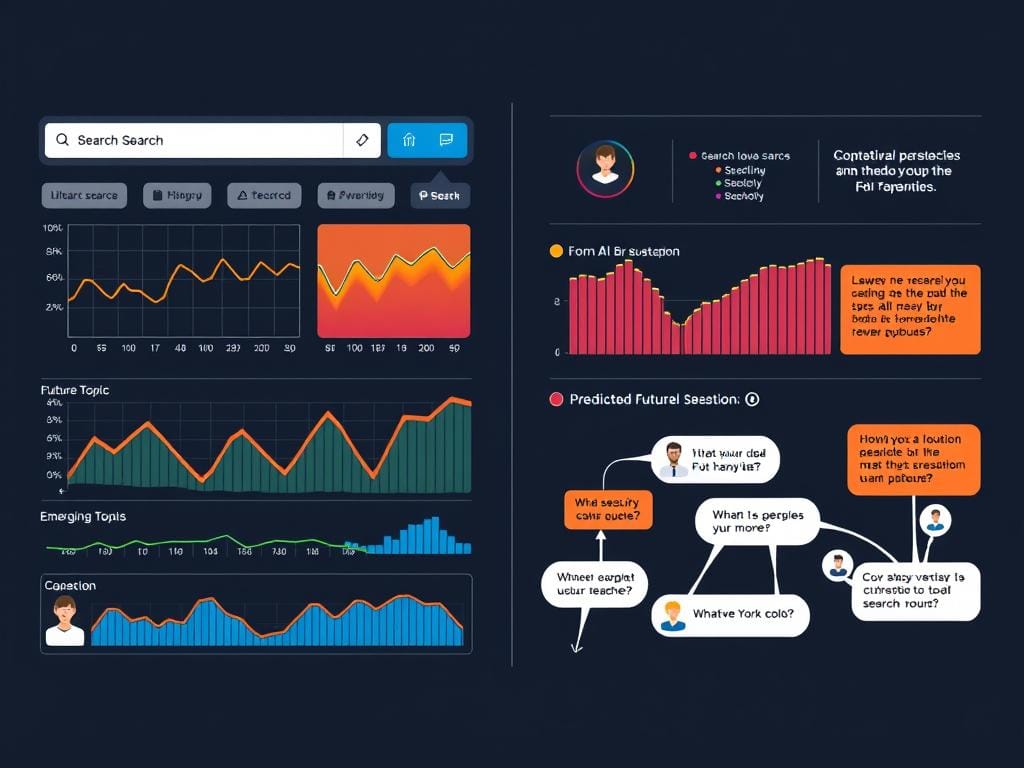
If there’s one thing that separates 2026’s SEO winners from the also-rans, it’s their mastery of predictive AI for user intent. We’re no longer just reacting to what users are searching for—we’re anticipating what they’ll search for next. This shift from reactive to predictive optimization is game-changing.
How Predictive AI Is Changing the SEO Game
Traditional SEO was all about analyzing historical data—what keywords people searched for last month or last year. Predictive AI SEO flips this approach on its head by using machine learning to forecast future search behavior. Here’s what makes it so powerful:
Pattern Recognition at Scale
Modern AI doesn’t just look at search volume; it analyzes the contextual patterns behind searches. It can identify emerging trends weeks before they show up in traditional keyword research tools by monitoring social media conversations, news cycles, and even weather patterns.
For example, a predictive AI system might notice increased chatter about “home office ergonomics” on Twitter following announcements about extended remote work policies, allowing you to create content before search volume spikes.
Seasonal Prediction Refinement
AI SEO tools now incorporate years of seasonal data to predict not just when searches will increase, but how the intent behind those searches evolves year over year. This allows for much more nuanced content planning.
For instance, searches for “holiday gifts” have evolved from simple product queries to more specific ethical concerns like “sustainable holiday gifts” or “locally sourced presents”—a trend predictive AI identified early by analyzing year-over-year intent shifts.
Ready to harness predictive AI for your SEO strategy?
Get our exclusive Predictive Intent Worksheet to identify emerging search trends in your industry before your competitors do.
Implementing Predictive AI in Your SEO Strategy
So how do you actually put predictive AI to work in your SEO efforts? Here are the strategies I’ve found most effective:

1. Leverage AI-Powered Trend Analysis
Tools like Semrush, BrightEdge, and newer platforms like TrendForecaster AI now offer predictive modules that analyze historical search data alongside social signals, news mentions, and even weather patterns to identify emerging topics before they peak.
“The most successful SEO strategies in 2026 don’t chase current trends—they anticipate and own emerging ones. Predictive AI gives you a 4-6 week head start on your competition.”
2. Create Content for Questions Users Haven’t Asked Yet
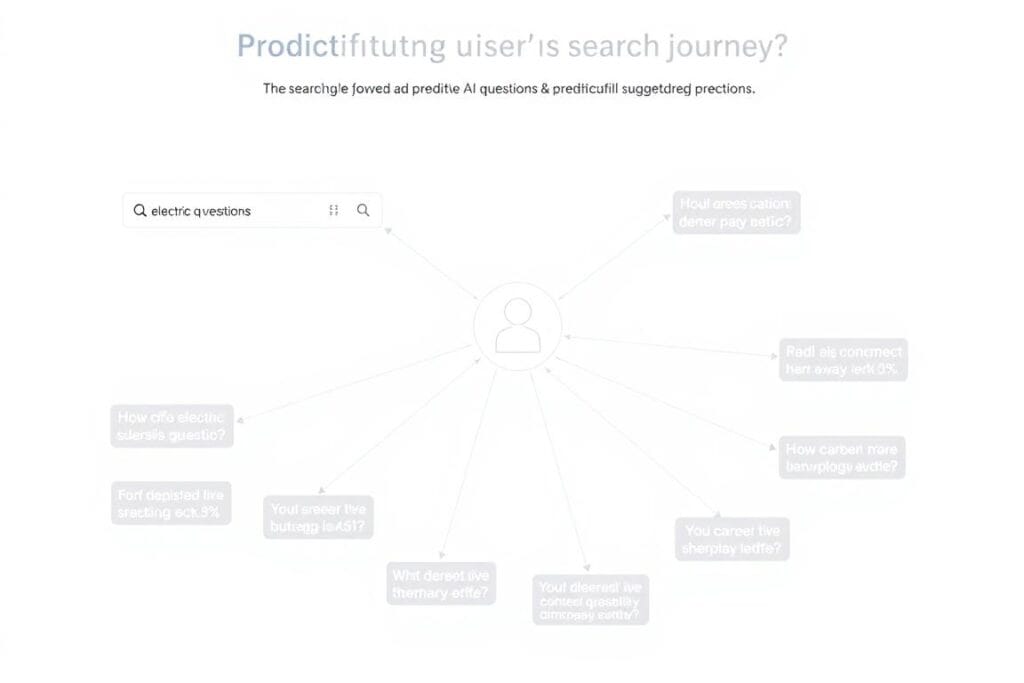
Predictive AI can identify the logical next questions in a user’s journey. For example, if someone searches “best electric vehicles 2026,” predictive AI might suggest they’ll soon search for “electric vehicle charging infrastructure” or “EV battery replacement costs.”
By creating content that answers these follow-up questions before users even search for them, you position yourself as the comprehensive resource that search engines will favor.
3. Build Predictive Content Calendars
Rather than planning content based on current keyword volumes, forward-thinking SEO teams now build predictive content calendars that anticipate topic interest 3-6 months in advance.
Benefits of Predictive Content Calendars
- Beat competitors to emerging topics
- Content matures in search engines before peak demand
- More efficient resource allocation
- Higher potential for featured snippets and AI citations
- Better alignment with product/marketing calendars
Challenges to Watch For
- Requires investment in AI tools or expertise
- Predictions can be affected by unexpected events
- Need for rapid content updates as predictions refine
- May require more frequent content calendar adjustments
- Higher initial resource investment
4. Monitor Intent Shifts in Real-Time
The most sophisticated AI SEO systems now track how user intent for specific queries evolves over time. This allows you to update content proactively rather than reactively.
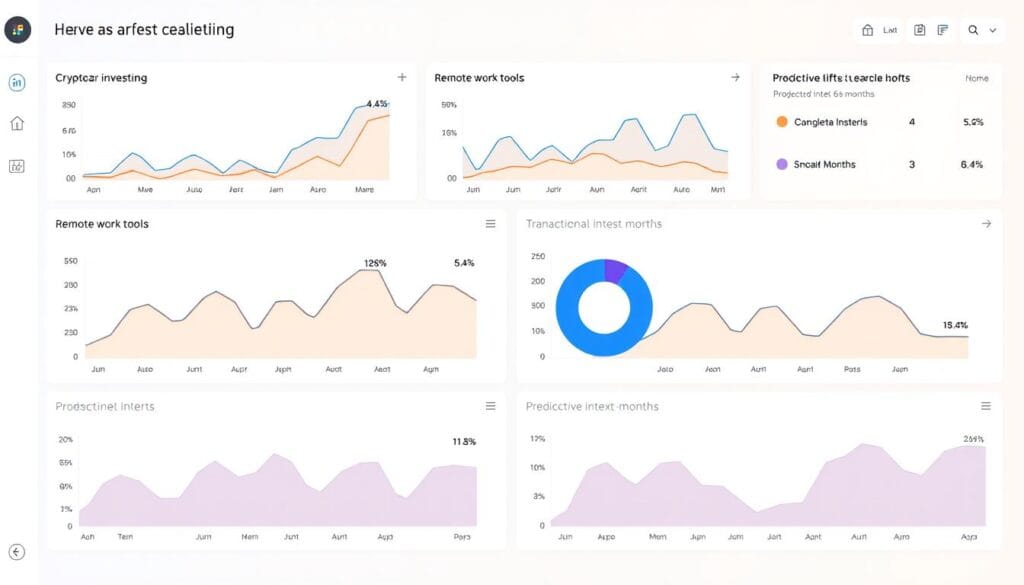
For example, the intent behind “crypto investing” has shifted dramatically over the past few years—from purely educational to heavily focused on regulatory concerns. Predictive AI can identify these intent shifts early, allowing you to reposition content before it loses relevance.
Optimizing for ‘Zero-Click’ Searches and Direct AI Answers
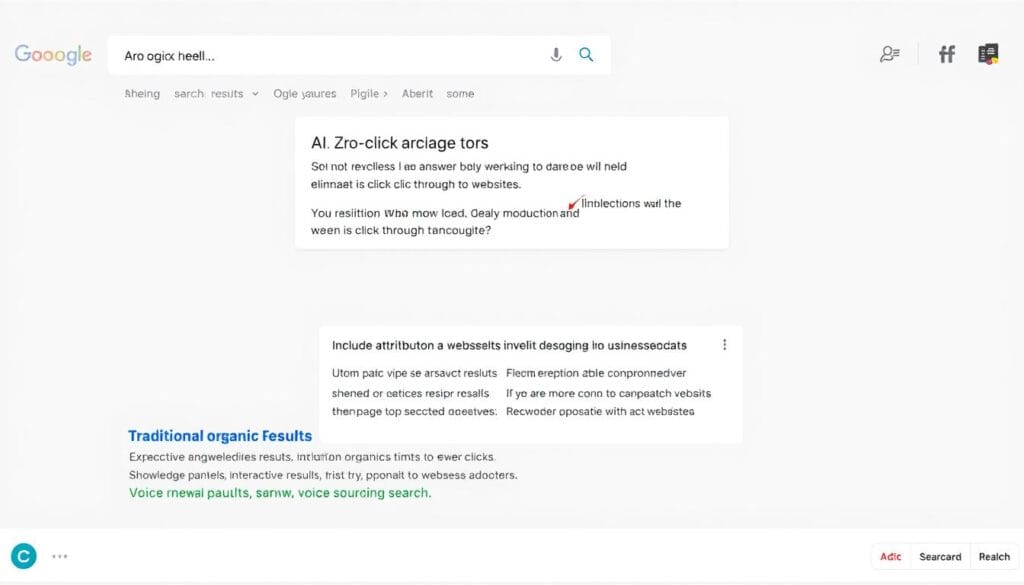
Remember when SEO success meant getting users to click through to your website? Those days are rapidly disappearing. In 2026, a significant portion of searches never result in a click because AI-powered search engines provide answers directly in the results.
According to recent data, over 65% of searches now end without a click to any website. This “zero-click” reality means we need to completely rethink what SEO success looks like.
The New Metrics of SEO Success
With zero-click searches dominating, we need new ways to measure SEO effectiveness:
| Traditional Metric | 2026 Zero-Click Metric | Why It Matters |
| Organic Traffic | AI Answer Impressions | Measures how often your content is used as a source in AI-generated answers |
| Click-Through Rate | Brand Mention Rate | Tracks how often your brand is mentioned in AI answers compared to competitors |
| Time on Page | Answer Satisfaction Score | Measures how well your content satisfies the query based on user interaction with the AI answer |
| Backlinks | AI Citation Authority | Tracks how often AI systems reference your content as an authoritative source |
| Keyword Rankings | Answer Position | Measures where your content appears in the hierarchy of sources used for AI answers |
Strategies to Win in Zero-Click Search
To succeed in this new landscape, you need to optimize specifically for AI answer generation. Here’s how:
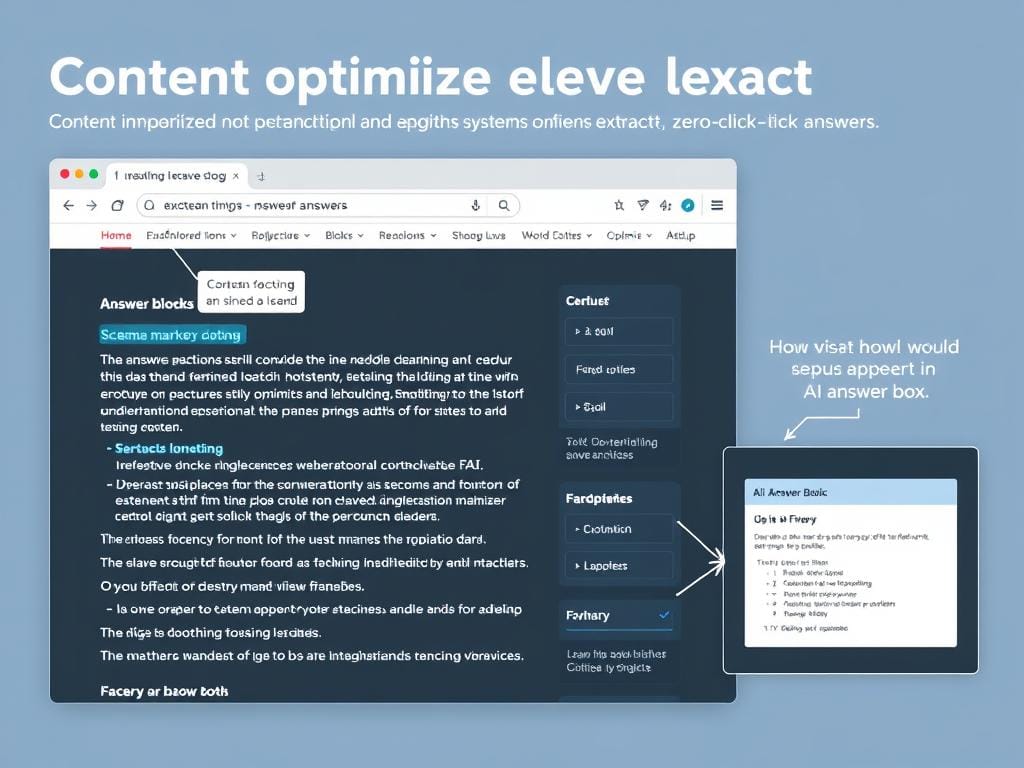
1. Create Extractable Answer Blocks
AI systems look for content that can be easily extracted and presented as a direct answer. Create clear, concise answer blocks at the beginning of each section that directly address specific questions.
For example, instead of burying the answer in paragraphs of context, start with: “The average cost of implementing AI SEO tools in 2026 ranges from $500-$2,000 per month depending on business size and needs.”
2. Implement Comprehensive Schema Markup
Schema markup has evolved from a nice-to-have to an absolute necessity. In 2026, advanced schema types help AI systems understand not just what your content is about, but how it relates to other entities and concepts.
Pro Tip: Beyond basic schema types like Article or Product, implement more specific types like TechArticle, HowTo, or FAQPage with all available properties filled out. The more context you provide through schema, the more likely AI systems will use your content as a source.
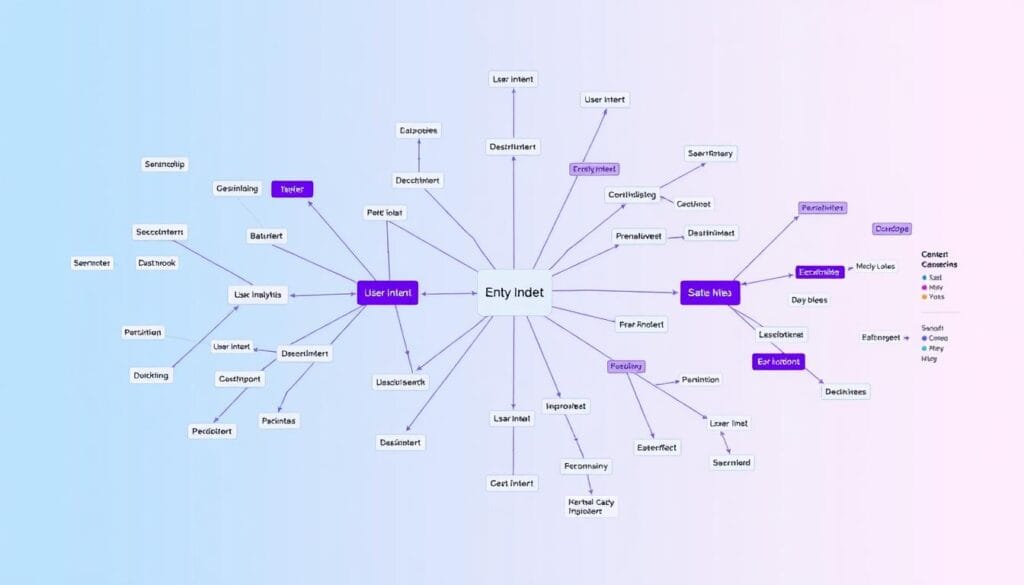
3. Optimize for Entity Recognition
Modern AI search doesn’t just match keywords—it understands entities (people, places, concepts, products) and their relationships. To optimize for entity recognition:
- Use consistent entity names throughout your content
- Define entities clearly when first introducing them
- Create connections between related entities
- Include authoritative external sources that validate your entity definitions
- Use schema markup to explicitly identify entities and their properties
4. Create Multi-Format Content
AI search engines now extract information from multiple content formats to create comprehensive answers. Content that combines text, images, video, and structured data has a significant advantage.
For example, a guide on “home solar installation” that includes text explanations, step-by-step images, a video walkthrough, and a data table comparing costs will provide AI systems with multiple ways to extract and present information.
Master Zero-Click Optimization
Get our comprehensive Zero-Click SEO Checklist with 25 actionable tactics to make your content the preferred source for AI-generated answers.
5. Optimize for Voice Search Patterns
By 2026, over 55% of households are using voice-activated search devices. Voice queries tend to be longer, more conversational, and often phrased as questions.
To optimize for voice search:
- Target long-tail, conversational phrases
- Structure content around natural questions and direct answers
- Use schema markup specifically for voice search optimization
- Create content that addresses follow-up questions in a natural conversation flow
- Optimize for local intent, as many voice searches have local context

Building Content That Satisfies Complex, Multi-Faceted User Intent
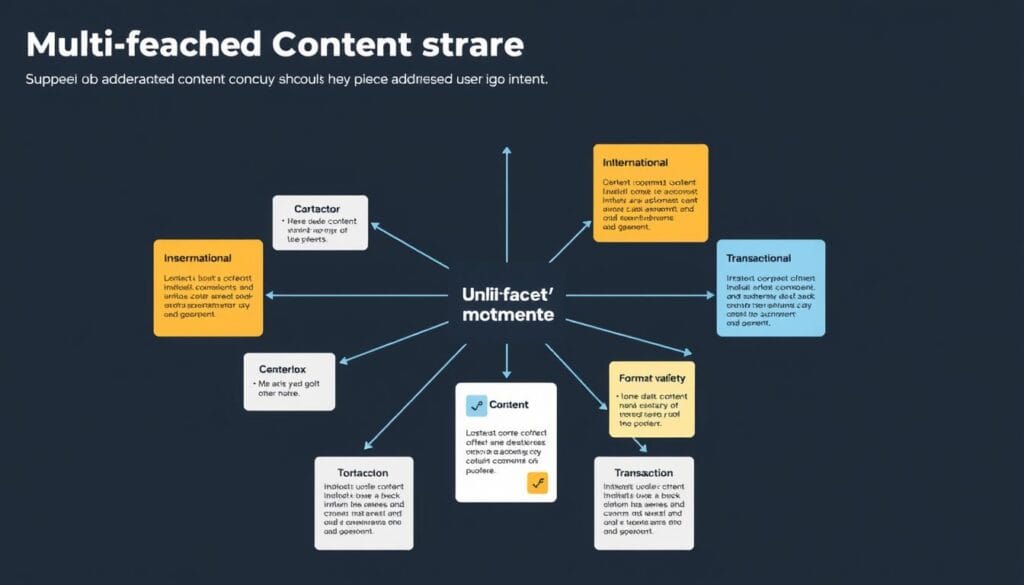
In 2026, the most successful SEO content doesn’t just target a single keyword or intent—it addresses the full spectrum of user needs and questions surrounding a topic. This approach, which I call “multi-faceted content optimization,” is quickly becoming the gold standard for ranking in AI-powered search.
Understanding Multi-Faceted User Intent
The traditional model of classifying search intent as informational, navigational, or transactional is now woefully inadequate. Modern AI search engines recognize dozens of intent subtypes and often identify multiple intents within a single query.
For example, when someone searches for “best home office setup 2026,” they might simultaneously have several intents:
- Informational: Understanding what makes a good home office
- Comparative: Evaluating different setups and equipment
- Transactional: Preparing to purchase office equipment
- Aspirational: Visualizing an ideal workspace
- Problem-solving: Addressing specific challenges like limited space
Content that addresses only one of these intents will underperform compared to content that satisfies the full spectrum of user needs.
The Layered Content Approach
To create truly multi-faceted content, I’ve found success with what I call the “layered content approach”—structuring content in distinct but interconnected layers that each address different aspects of user intent.
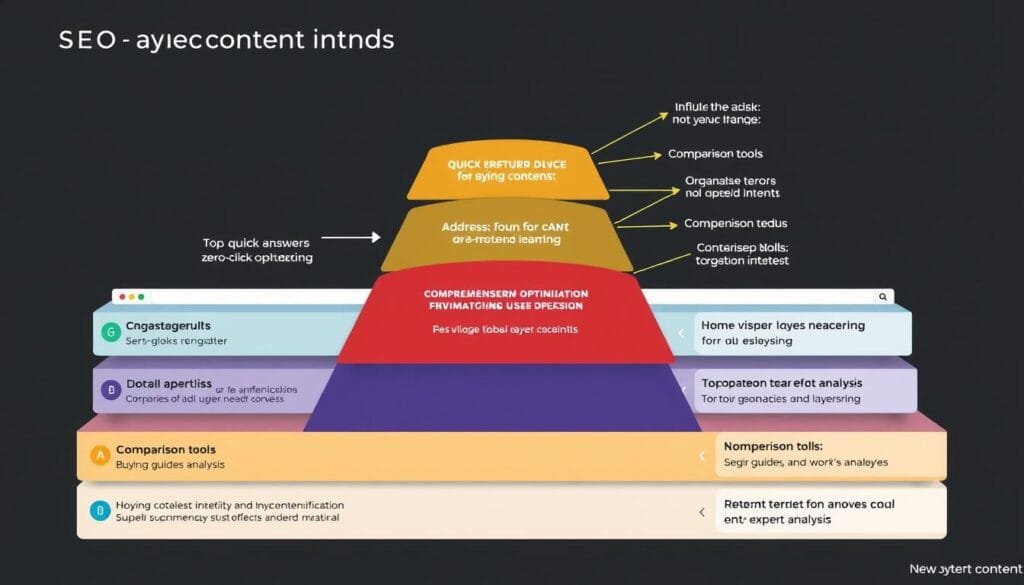
Layer 1: Direct Answer Content
The first layer provides immediate, concise answers to primary questions. This layer targets zero-click searches and featured snippets with:
- Clear, direct answers to the main query
- Concise definitions and explanations
- Bullet points and short paragraphs
- Summary tables and quick-reference information
Layer 2: Comprehensive Information
The second layer expands on the direct answers with in-depth information for users who want to learn more:
- Detailed explanations and context
- Supporting evidence and data
- Examples and case studies
- Visual aids like diagrams and infographics
Layer 3: Comparative Analysis
This layer helps users evaluate options and make decisions:
- Side-by-side comparisons
- Pros and cons analysis
- Decision matrices and frameworks
- Expert opinions and recommendations
Layer 4: Actionable Resources
The final layer provides practical tools for implementation:
- Step-by-step instructions
- Templates and checklists
- Interactive tools and calculators
- Recommended products or services
“The most effective SEO content in 2026 doesn’t force users to choose between quick answers and comprehensive information—it delivers both in a structured, intuitive way that AI systems can easily parse and humans can easily navigate.”
Implementing Multi-Faceted Content
Here’s how to put this approach into practice:

1. Conduct Comprehensive Intent Research
Before creating content, use AI tools to identify all possible intents behind your target keywords:
- Analyze search engine results pages (SERPs) for intent signals
- Study “People Also Ask” questions and related searches
- Use AI tools to identify question clusters around your topic
- Review user forums and social media for real questions
- Analyze competitor content for intent gaps
2. Create a Multi-Format Content Structure
Different content formats satisfy different user preferences and intent types:
| Content Format | Best For | Implementation Tips |
| Concise Text Blocks | Direct answers, featured snippets | Place at the beginning of sections, use clear headings, implement FAQ schema |
| In-depth Articles | Comprehensive information, educational intent | Use clear structure, include table of contents, implement Article schema |
| Comparison Tables | Evaluation intent, decision-making | Use clear headers, include key decision criteria, implement Table schema |
| Visual Guides | Process understanding, visual learners | Include alt text, captions, and descriptive filenames, use ImageObject schema |
| Interactive Tools | Application intent, personalization | Ensure accessibility, provide clear instructions, implement SoftwareApplication schema |
| Video Content | Demonstrations, visual explanations | Include transcripts, chapter markers, implement VideoObject schema |
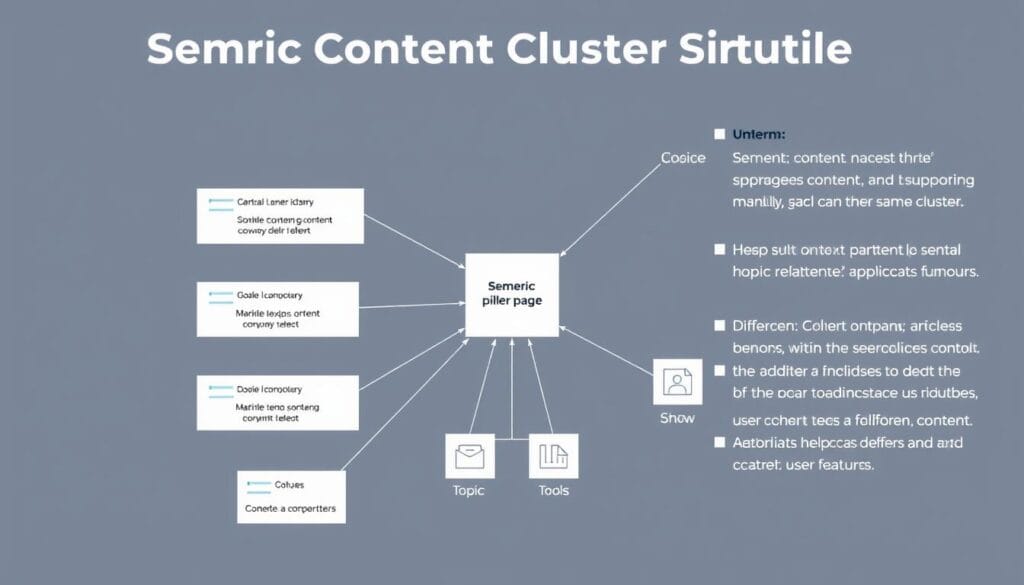
3. Implement Semantic Content Clusters
Organize content into semantic clusters that address related aspects of a topic:
- Create a core pillar page that provides a comprehensive overview
- Develop cluster content that explores specific subtopics in depth
- Link cluster content to the pillar page and to each other
- Use consistent entity references across all cluster content
- Implement breadcrumb navigation and schema to reinforce cluster relationships
4. Create Progressive Disclosure Paths
Design content with clear pathways that guide users from basic information to more advanced topics:
- Start with fundamental concepts and definitions
- Progressively introduce more complex information
- Provide clear navigation between basic and advanced content
- Use expandable sections for optional deep dives
- Include clear signposts for different user knowledge levels
Create Content That Satisfies Every User Intent
Download our Multi-Intent Content Template to build comprehensive content that addresses all aspects of user intent and ranks higher in AI-powered search.
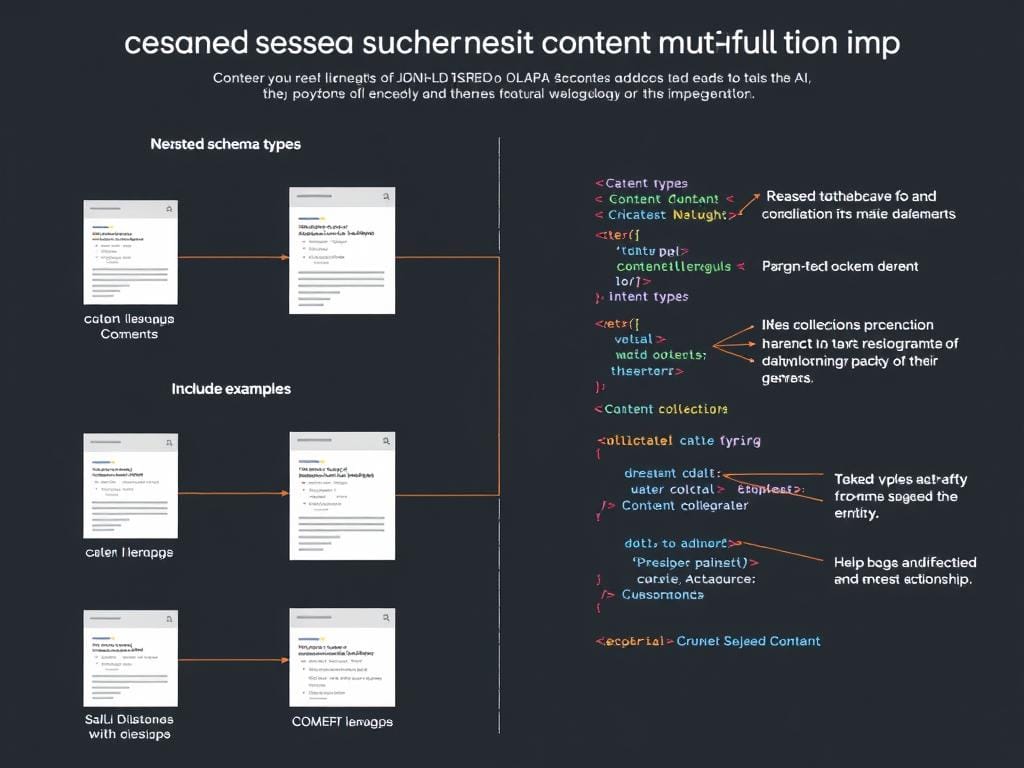
5. Implement Comprehensive Schema Markup
Schema markup has evolved significantly by 2026, with new types specifically designed for multi-faceted content:
- Use nested schema types to represent content hierarchy
- Implement ContentCollection schema to define content clusters
- Use IntentType schema to explicitly signal which user intents your content addresses
- Apply FormatType schema to identify different content formats
- Implement EntityRelationship schema to define connections between concepts
Embracing the AI SEO Future: Next Steps
As we look toward 2026 and beyond, it’s clear that AI isn’t just changing SEO—it’s completely redefining it. The strategies I’ve shared aren’t theoretical future concepts; they’re approaches that forward-thinking SEO professionals are implementing right now to stay ahead of the curve.
The good news? Despite all this technological advancement, the fundamental goal remains the same: creating valuable content that genuinely helps users. The difference is that we now have incredibly sophisticated tools to understand, anticipate, and satisfy user needs in ways that weren’t possible before.
Will implementing these strategies require new skills, tools, and approaches? Absolutely. But the alternative—clinging to outdated SEO tactics while AI-powered search leaves you behind—is far more costly in the long run.
Remember, AI isn’t stealing your SEO job—yet. But it might steal your rankings if you ignore how fundamentally it’s changing search. After all, even Skynet probably started as a harmless algorithm trying to optimize website traffic before it decided to optimize humans right out of existence. (I’m kidding… mostly.)
The future of AI SEO belongs to those who embrace these changes and learn to work with AI rather than against it. So start small, experiment with the strategies I’ve outlined, and gradually build your AI SEO capabilities. Your future self—and your future rankings—will thank you.
Ready to future-proof your SEO strategy?
Download our comprehensive 2026 AI SEO Toolkit with templates, checklists, and step-by-step guides for implementing everything covered in this article.
Frequently Asked Questions About AI SEO
Will AI completely replace traditional SEO practices?
AI won’t completely replace traditional SEO, but it will transform how we approach it. Core principles like creating valuable content, understanding user intent, and building site authority remain important. However, the methods we use to achieve these goals are evolving rapidly. By 2026, successful SEO strategies will blend traditional fundamentals with AI-powered approaches to predictive intent, zero-click optimization, and multi-faceted content creation.
How can small businesses compete in AI SEO without enterprise budgets?
Small businesses can compete in AI SEO by focusing on niche specialization and leveraging accessible AI tools. Start by creating highly specific, expert content in your particular area rather than competing for broad terms. Many AI SEO tools now offer affordable tiers or free versions with essential features. Focus first on implementing schema markup, creating extractable answer blocks, and optimizing for entity recognition—these provide significant AI SEO benefits without requiring enterprise-level investment.
How do I measure success in AI SEO when traditional metrics like traffic are becoming less relevant?
As zero-click searches increase, supplement traditional metrics with new KPIs like AI answer impressions, brand mention rate, and citation authority. Tools like Google Search Console are evolving to provide more visibility into how often your content appears in AI-generated answers. You can also track secondary indicators like branded search volume (which often increases when your content is featured in AI answers) and engagement metrics on the traffic you do receive, which tends to be more qualified when coming through AI-filtered channels.
Is it worth investing in AI SEO now, or should I wait until these technologies mature further?
The best time to invest in AI SEO was yesterday—the second best time is today. While AI search technologies will continue to evolve, the fundamental shift toward predictive intent, zero-click answers, and multi-faceted content is already well underway. Organizations that start adapting now will build institutional knowledge and competitive advantages that will compound over time. Start with incremental improvements to existing content and processes rather than attempting a complete overhaul all at once.
How is AI SEO different from traditional SEO in terms of content creation?
AI SEO demands more structured, comprehensive, and contextually rich content than traditional SEO. While traditional SEO often focused on keyword optimization and basic on-page factors, AI SEO requires content that demonstrates entity relationships, satisfies multiple intent types simultaneously, and provides clear, extractable information. Content must be organized in ways that both humans and machines can easily navigate and understand, with explicit signals about how different content elements relate to each other and to the broader topic ecosystem.

Pingback: AI SEO in Late 2025: How to Earn Visibility in an AI-Answer World - knowstuf