
Note: This article contains affiliate links. When you purchase through these links, we may earn a commission at no additional cost to you. This helps support our testing and research to bring you honest, unbiased reviews.
Quick Comparison: Digital Cameras for 2025
| Camera Model | Resolution | Sensor Size | Video | Autofocus | Our Rating |
| Fujifilm X-T5 | 40.2MP | APS-C | 6.2K/30p | 425-point hybrid | 4.8/5 |
| Sony A7R V | 61MP | Full-Frame | 8K/24p | 693-point phase-detect | 4.7/5 |
| Canon EOS R6 Mark II | 24.2MP | Full-Frame | 4K/60p | 1,053-zone Dual Pixel CMOS | 4.6/5 |
| Nikon Z6 III | 24.5MP | Full-Frame | 6K/60p | Hybrid AF | 4.9/5 |
| Fujifilm X100VI | 40MP | APS-C | 6.2K | 425-point hybrid | 4.8/5 |
| OM System OM-1 II | 20.4MP | Micro Four Thirds | 4K/60p | 1,053-point Cross-Quad Pixel | 4.5/5 |
| Canon EOS R10 | 24.2MP | APS-C | 4K/60p | 651-area Dual Pixel CMOS | 4.4/5 |
| DJI Osmo Action 5 Pro | 40MP | 1/1.3-inch | 4K/120p | Contrast-detect | 4.3/5 |
Editor’s Choice: Nikon Z6 III
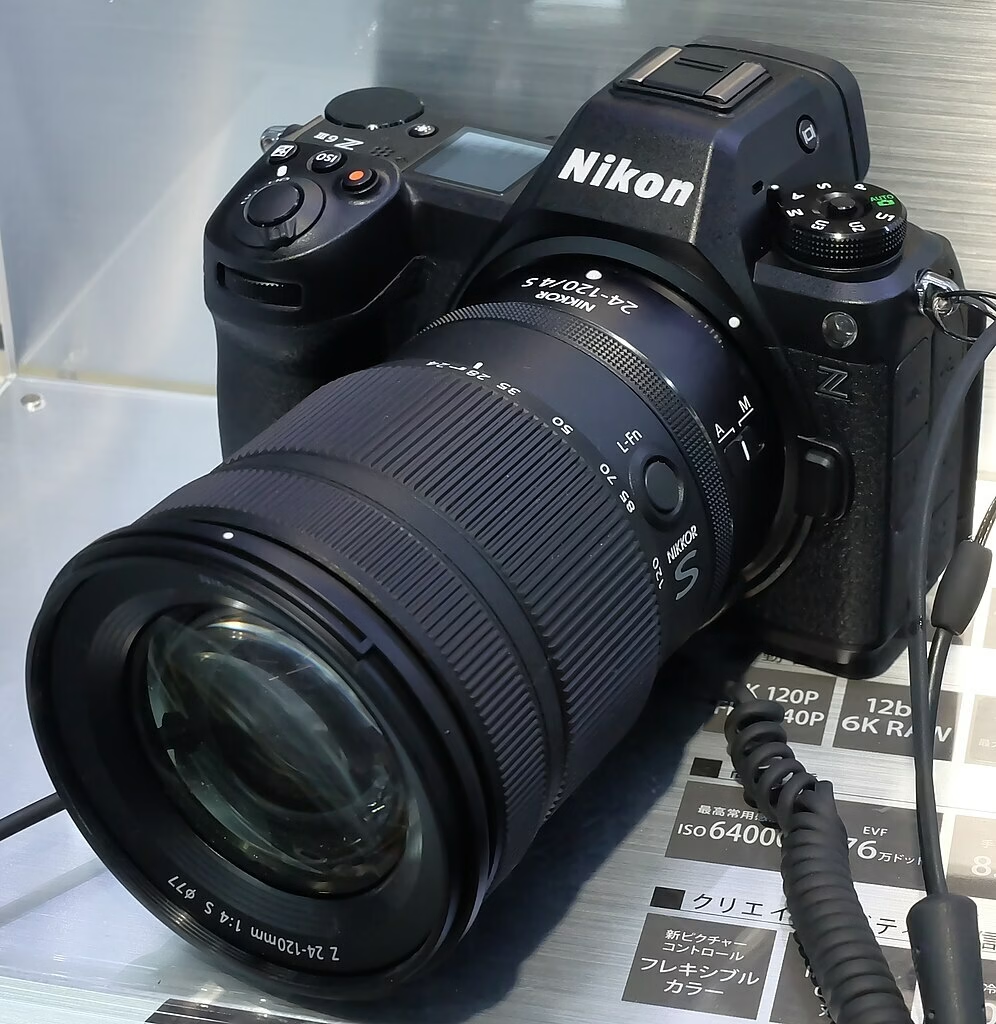
The Nikon Z6 III stands as our top pick for 2025, delivering exceptional performance across all metrics. This full-frame mirrorless camera represents a significant upgrade from its predecessor, with improvements in autofocus speed, burst shooting capabilities, and video performance. What truly sets the Z6 III apart is its versatility – it excels in virtually every shooting scenario, from low-light environments to fast-action sports photography.
The 24.5MP partially-stacked BSI CMOS sensor delivers outstanding image quality with excellent dynamic range and low-light performance. Its class-leading autofocus system with advanced subject detection can track subjects with remarkable precision, even in challenging conditions. For videographers, the Z6 III offers impressive 6K/60p recording capabilities with N-Raw and ProRes support, making it a true hybrid powerhouse.
Pros
- Excellent autofocus with reliable subject tracking
- Impressive 20fps burst shooting with full AF/AE
- Outstanding low-light performance
- Exceptional 5.76M-dot electronic viewfinder
- Professional-grade 6K/60p video capabilities
Cons
- No improvement in resolution over predecessor
- Battery life could be better
- External battery charger not included
- Premium price point
| Specifications | |
|---|---|
| 24.5MP Full-Frame Partially Stacked BSI CMOS | 4.0 x 5.5 x 2.9 inches |
| 50-204,800 (extended) | 1.5 lb (body only) |
| 20fps (mechanical), up to 120fps (APS-C crop) | Dual slots: CFexpress Type B, SD UHS-II |
| 6K/60p, 4K/120p | Approx. 380 shots (CIPA) |
| 5-axis in-body (up to 8 stops) | Wi-Fi, Bluetooth, USB-C, HDMI |
The Nikon Z6 III represents the pinnacle of what a modern hybrid camera should be. Its combination of exceptional image quality, blazing-fast performance, and professional-grade video capabilities make it our top recommendation for serious photographers and content creators in 2025. While it comes at a premium price, the versatility and performance it offers justify the investment for those who demand the best.
Buy Now →
Best for Enthusiast Photographers: Fujifilm X-T5

The Fujifilm X-T5 continues the beloved X-T series tradition of combining classic design with cutting-edge technology. This APS-C mirrorless camera features a high-resolution 40.2MP X-Trans CMOS 5 HR sensor that delivers exceptional detail and Fujifilm’s renowned color science. The X-T5 is particularly appealing to enthusiast photographers who appreciate its tactile, dial-based controls and compact form factor.
What makes the X-T5 special is its perfect balance of size, performance, and image quality. The camera’s 5-axis in-body image stabilization (rated up to 7 stops) allows for steady handheld shooting in challenging conditions. Its improved autofocus system with subject detection for animals, birds, cars, motorcycles, planes, and trains ensures you’ll capture sharp images of moving subjects.
Pros
- Exceptional 40.2MP image quality
- Intuitive analog-style control dials
- Effective 7-stop image stabilization
- Compact and lightweight design
- Beautiful film simulation modes
Cons
- Buffer fills quickly at the highest resolution
- Autofocus is not quite on par with flagship models
- Limited battery life
- No fully articulating screen
| Specifications | |
|---|---|
| 40.2MP APS-C X-Trans CMOS 5 HR | 3.4 x 5.0 x 2.6 inches |
| 125-12,800 (extended: 64-51,200) | 1.23 lb (body only) |
| 15fps (mechanical), 20fps (electronic) | Dual SD UHS-II slots |
| 6.2K/30p, 4K/60p | Approx. 580 shots (CIPA) |
| 5-axis in-body (up to 7 stops) | Wi-Fi, Bluetooth, USB-C, HDMI |
The Fujifilm X-T5 is the ideal camera for photographers who value the shooting experience as much as the final image. Its retro-inspired design houses modern technology that delivers outstanding results across a wide range of photography genres. With access to Fujifilm’s excellent lineup of X-mount lenses, the X-T5 represents one of the most compelling APS-C systems available in 2025.
Buy Now →
Best for High-Resolution Photography: Sony A7R V
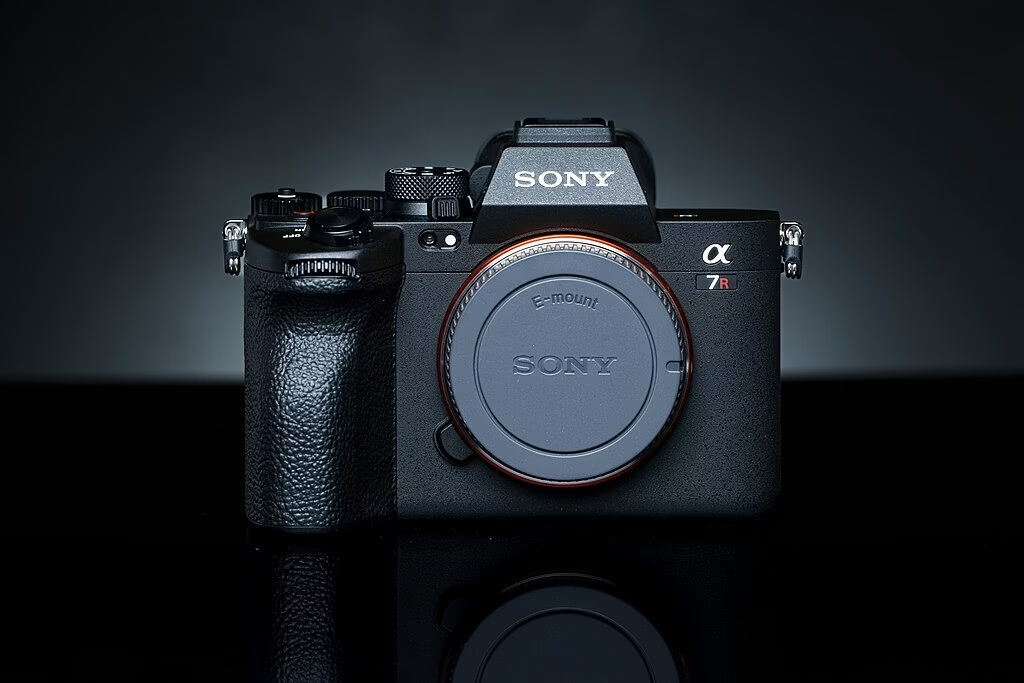
The Sony A7R V is the resolution champion in Sony’s full-frame lineup, featuring an impressive 61MP sensor that captures extraordinary detail. This fifth-generation model builds upon Sony’s proven track record with significant improvements in autofocus intelligence, handling, and overall performance. For photographers who demand maximum resolution without stepping up to medium format, the A7R V is the camera to beat in 2025.
What truly distinguishes the A7R V is its advanced AI-based subject recognition autofocus system, which can identify and track a wide range of subjects with remarkable precision. Combined with improved ergonomics, a higher-resolution EVF, and enhanced image stabilization, the A7R V offers a more refined shooting experience than its predecessors while maintaining class-leading resolution.
Pros
- Exceptional 61MP resolution
- Advanced AI-based autofocus
- Improved ergonomics and handling
- Excellent dynamic range
- 8K video capabilities
Cons
- Premium price point
- Large file sizes require storage management
- Demanding on lenses – requires high-quality glass
- Relatively heavy for a mirrorless camera
| Specifications | |
|---|---|
| 61MP Full-Frame Exmor R CMOS | 5.2 x 3.8 x 3.2 inches |
| 100-32,000 (extended: 50-102,400) | 1.6 lb (body only) |
| 10fps with AF/AE tracking | Dual slots: CFexpress Type A, SD UHS-II |
| 8K/24p, 4K/60p | Approx. 530 shots (CIPA) |
| 5-axis in-body (up to 8 stops) | Wi-Fi, Bluetooth, USB-C, HDMI |
The Sony A7R V is the ultimate tool for photographers who prioritize detail and resolution. Landscape, architectural, studio, and commercial photographers will appreciate its ability to capture fine details and produce large, high-quality prints. While its price reflects its professional positioning, the A7R V delivers uncompromising image quality that justifies the investment for those who need the absolute best in resolution.
Buy Now →
Best for Wedding and Event Photography: Canon EOS R6 Mark II

The Canon EOS R6 Mark II is a versatile full-frame mirrorless camera that excels in fast-paced environments like weddings and events. Building on the success of the original R6, this second-generation model features a higher-resolution 24.2MP sensor, improved autofocus capabilities, and enhanced video features. Its combination of speed, reliability, and low-light performance makes it an ideal tool for professional event photographers.
What sets the R6 Mark II apart is its exceptional autofocus system with advanced subject detection and tracking. The camera can identify and track people, animals, and vehicles with remarkable accuracy, even in challenging lighting conditions. Its impressive burst rate of up to 40fps with the electronic shutter ensures you’ll never miss a critical moment, while dual card slots provide peace of mind for professional work.
Pros
- Outstanding autofocus performance
- Impressive burst shooting (12fps mechanical, 40fps electronic)
- Excellent low-light capabilities
- Effective image stabilization (up to 8 stops)
- Dual card slots for professional reliability
Cons
- Some rolling shutter with electronic shutter
- Higher price than original R6
- Battery life could be better
- Limited buffer with highest burst rates
| Specifications | |
|---|---|
| 24.2MP Full-Frame CMOS | 5.5 x 3.9 x 3.5 inches |
| 100-102,400 (extended: 50-204,800) | 1.5 lb (body only) |
| 12fps (mechanical), 40fps (electronic) | Dual SD UHS-II slots |
| 4K/60p, Full HD 180fps | Approx. 450 shots (CIPA) |
| 5-axis in-body (up to 8 stops) | Wi-Fi, Bluetooth, USB-C, HDMI |
The Canon EOS R6 Mark II is the perfect camera for professionals who need reliability and performance in unpredictable shooting environments. Wedding, event, and sports photographers will appreciate its fast burst rates, excellent autofocus, and low-light capabilities. While not the highest resolution option, its 24.2MP sensor strikes an excellent balance between detail, file size, and low-light performance, making it an ideal workhorse camera for professional use.
Buy Now →
Best Premium Compact Camera: Fujifilm X100VI
The Fujifilm X100VI continues the legendary X100 series with significant upgrades while maintaining the classic design that has made it a favorite among street and documentary photographers. This premium compact camera features a fixed 23mm f/2 lens (35mm equivalent) and a new 40MP APS-C sensor, delivering exceptional image quality in a portable package. The addition of in-body image stabilization for the first time in the X100 series is a game-changer for low-light shooting.
What makes the X100VI special is its unique hybrid viewfinder, which allows photographers to switch between optical and electronic views. This, combined with its discreet operation and classic rangefinder-inspired design, creates an engaging shooting experience that digital photographers often miss. Fujifilm’s renowned film simulations provide beautiful JPEG output straight from the camera, reducing the need for extensive post-processing.
Pros
- Stunning retro design with premium build quality
- Excellent 40MP image quality
- Unique hybrid optical/electronic viewfinder
- In-body image stabilization (new to X100 series)
- Beautiful film simulation modes
Cons
- Fixed lens limits versatility
- Premium price point
- Requires an adapter for full weather sealing
- Single UHS-I card slot
| Specifications | |
|---|---|
| 40MP APS-C X-Trans CMOS | 5.0 x 2.9 x 2.2 inches |
| 64-51,200 (extended) | 1.2 lb |
| 23mm f/2 (35mm equivalent) | Single SD UHS-I slot |
| 6.2K/30p, 4K/60p | Approx. 450 shots (CIPA) |
| 5-axis in-body | Wi-Fi, Bluetooth, USB-C, Microphone (2.5mm) |
The Fujifilm X100VI is the ultimate premium compact camera for photographers who value simplicity, style, and exceptional image quality. Its fixed 35mm equivalent lens encourages creative composition and its discreet operation makes it perfect for street photography. While the fixed lens may seem limiting, many photographers find that this constraint actually enhances their creativity. For those who want a camera that combines digital capabilities with the soul of a classic film camera, theX100VI is unmatched.
Buy Now →
Best Micro Four Thirds Camera: OM System OM-1 II
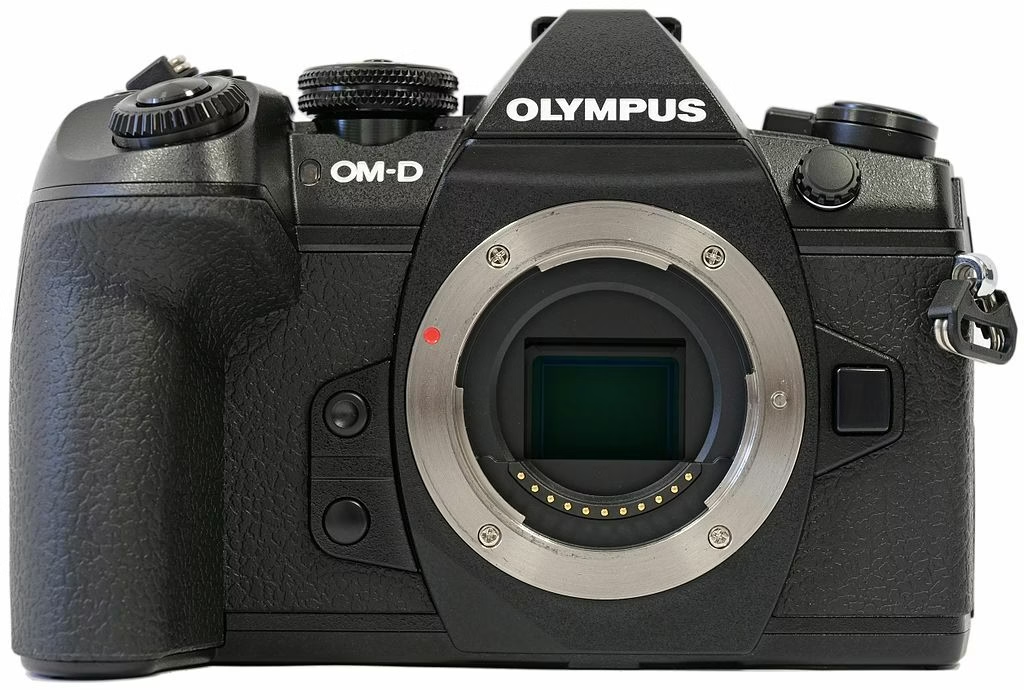
The OM System OM-1 II represents the pinnacle of Micro Four Thirds technology, building on the foundation established by the original Olympus OM-1. This flagship camera features a 20.4MP stacked CMOS sensor that delivers impressive speed and computational photography capabilities in a compact, weather-sealed body. For photographers who prioritize portability without sacrificing professional features, the OM-1 II offers an excellent alternative to larger systems.
What distinguishes the OM-1 II is its combination of computational photography features and exceptional weather sealing (IP53 rated). The camera includes specialized modes like Live ND, High Res Shot, and the unique Starry Sky AF for astrophotography. Its industry-leading image stabilization system provides up to 8.5 stops of compensation, enabling handheld shooting in challenging conditions that would normally require a tripod.
Pros
- Exceptional weather sealing (IP53 rated)
- Industry-leading image stabilization (up to 8.5 stops)
- Impressive computational photography features
- Fast burst shooting (up to 120fps)
- Compact and lightweight system
Cons
- Limited to 20MP resolution
- Smaller sensor shows limitations in low light
- Minor upgrade from the original OM-1
- Battery life could be better
| Specifications | |
|---|---|
| 20.4MP Micro Four Thirds Stacked CMOS | 5.3 x 3.6 x 2.9 inches |
| 80-25,600 (extended: 64-102,400) | 1.3 lb (body only) |
| 50fps (mechanical), 120fps (electronic) | Dual SD UHS-II slots |
| 4K/60p, Full HD 240fps | Approx. 520 shots (CIPA) |
| 5-axis in-body (up to 8.5 stops) | Wi-Fi, Bluetooth, USB-C, HDMI, Microphone, Headphone |
The OM System OM-1 II is the ideal camera for outdoor enthusiasts, travel photographers, and anyone who values a lightweight system without compromising on features or durability. While its smaller Micro Four Thirds sensor doesn’t match the low-light performance of full-frame alternatives, the extensive lens selection, computational features, and exceptional stabilization make it a compelling option for photographers who prioritize portability and versatility over absolute image quality.
Buy Now →
Best Budget-Friendly Mirrorless: Canon EOS R10
The Canon EOS R10 brings advanced features to an affordable price point, making it an excellent entry point into Canon’s RF mount ecosystem. This APS-C mirrorless camera packs a 24.2MP sensor, impressive autofocus capabilities, and fast burst shooting into a compact, lightweight body. For beginners and enthusiasts on a budget, the R10 offers exceptional value without compromising on core performance.
What makes the R10 stand out in its price range is its autofocus system, which is inherited from higher-end Canon models. The camera features subject detection and tracking for people, animals, and vehicles, providing professional-level focusing capabilities at an entry-level price. Its 15fps mechanical shutter (25fps electronic) also outperforms many cameras in its class, making it suitable for action and sports photography.
Pros
- Excellent value for money
- Advanced autofocus with subject detection
- Fast burst shooting (15fps mechanical, 25fps electronic)
- Compact and lightweight design
- Fully articulating touchscreen
Cons
- No in-body image stabilization
- Limited native RF-S lens selection
- Single card slot
- Modest battery life
| Specifications | |
|---|---|
| 24.2MP APS-C CMOS | 4.4 x 3.0 x 2.7 inches |
| 100-32,000 (extended: 100-51,200) | 0.9 lb (body only) |
| 15fps (mechanical), 25fps (electronic) | Single SD UHS-II slot |
| 4K/60p (cropped), 4K/30p (uncropped) | Approx. 430 shots (CIPA) |
| None (lens-based only) | Wi-Fi, Bluetooth, USB-C, HDMI, Microphone |
The Canon EOS R10 is the perfect camera for beginners and enthusiasts who want advanced features without breaking the bank. Its combination of excellent autofocus, fast burst shooting, and good image quality make it suitable for a wide range of photography genres. While the lack of in-body stabilization and limited native RF-S lens selection are drawbacks, the ability to use RF full-frame lenses (and EF lenses via an adapter) provides plenty of flexibility as your skills grow.
Buy Now →
Best Action Camera: DJI Osmo Action 5 Pro
The DJI Osmo Action 5 Pro sets a new standard for action cameras in 2025, combining exceptional image quality with robust features in a compact, waterproof package. Featuring a larger 1/1.3-inch sensor than most action cameras, the Osmo Action 5 Pro delivers superior low-light performance and can capture detailed 40MP stills in both JPEG and RAW formats. For adventure enthusiasts who want to document their experiences with high-quality photos and videos, this camera offers an excellent balance of features and performance.
What makes the Osmo Action 5 Pro stand out is its class-leading battery life and effective digital stabilization. The camera can record for over two hours of continuous 4K60 footage on a single charge, significantly outperforming competitors. Its RockSteady 3.0 stabilization delivers incredibly smooth footage even in extreme conditions, while the dual touchscreens (front and rear) make framing and controlling the camera intuitive from any angle.
Pros
- Excellent image quality with 40MP stills
- Superior low-light performance
- Class-leading battery life
- Effective digital stabilization
- Waterproof to 65.6 feet without a case
Cons
- More expensive than some competitors
- App features not as comprehensive as GoPro
- No modular lens accessories
- Limited slow-motion options compared to rivals
| Specifications | |
|---|---|
| 40MP 1/1.3-inch CMOS | 2.8 x 1.7 x 1.3 inches |
| 100-51,200 | 5.2 oz |
| 9mm f/2.8 (equivalent) | microSDXC + 47GB internal |
| 4K/120p, 10-bit | 160 minutes at 4K/60p |
| RockSteady 3.0 + HorizonSteady | Wi-Fi, Bluetooth, USB-C |
The DJI Osmo Action 5 Pro is the ideal camera for adventure enthusiasts who want to capture high-quality photos and videos in challenging environments. Its combination of excellent image quality, robust waterproofing, and exceptional battery life make it a reliable companion for everything from underwater diving to extreme sports. While it comes at a premium price compared to some competitors, the superior low-light performance and overall reliability justify the investment for serious action photographers and videographers.
Buy Now →
Feature Comparison: How These Digital Cameras for 2025 Stack Up
When comparing these top digital cameras for 2025, several key factors should influence your decision. Sensor size significantly impacts image quality, with full-frame options like the Nikon Z6 III and Sony A7R V offering superior low-light performance and dynamic range. However, APS-C cameras like the Fujifilm X-T5 and Canon EOS R10 provide excellent image quality in a more compact, affordable package.
Resolution requirements vary by photography genre. Landscape and studio photographers will appreciate the detail captured by the 61MP Sony A7R V, while event and sports photographers may prefer the balanced 24MP resolution of the Nikon Z6 III or Canon EOS R6 Mark II, which offer faster processing and better high-ISO performance.
Autofocus capabilities have seen remarkable improvements across all price points. The Nikon Z6 III and Canon EOS R6 Mark II feature industry-leading subject detection and tracking, while even the budget-friendly Canon EOS R10 offers impressive autofocus performance that rivals professional models from just a few years ago.
Video features have become increasingly important, with most cameras now offering 4K recording. The Nikon Z6 III stands out with its 6K/60p capabilities and professional codecs, while the DJI Osmo Action 5 Pro excels in challenging environments with its excellent stabilization and waterproof design.
| Feature | Best For | Top Pick | Runner-Up |
| Overall Performance | Professional hybrid shooters | Nikon Z6 III | Canon EOS R6 Mark II |
| Resolution | Landscape & studio photography | Sony A7R V (61MP) | Fujifilm X-T5 (40.2MP) |
| Autofocus | Action & wildlife photography | Nikon Z6 III | Canon EOS R6 Mark II |
| Video | Filmmakers & content creators | Nikon Z6 III (6K/60p) | Sony A7R V (8K/24p) |
| Portability | Travel & street photography | Fujifilm X100VI | OM System OM-1 II |
| Value | Beginners & budget-conscious | Canon EOS R10 | OM System OM-1 II |
| Durability | Outdoor & adventure photography | DJI Osmo Action 5 Pro | OM System OM-1 II |
Buying Guide: How to Choose the Right Digital Camera in 2025

Consider Your Photography Style
The first step in choosing the right digital camera is to assess your photography needs and style. Different cameras excel in different scenarios:
- Portrait photographers benefit from cameras with excellent skin tone rendering and fast prime lenses, like the Sony A7R V or Canon EOS R6 Mark II.
- Landscape photographers should prioritize high resolution and dynamic range, making the Sony A7R V or Fujifilm X-T5 excellent choices.
- Wildlife and sports photographers need fast burst rates and reliable autofocus, which the Nikon Z6 III and Canon EOS R6 Mark II deliver.
- Street photographers often prefer discreet, compact cameras like the Fujifilm X100VI.
- Travel photographers should balance image quality with portability, making the OM System OM-1 II or Fujifilm X-T5 good options.
- Adventure photographers need durability and weather resistance, which the DJI Osmo Action 5 Pro and OM System OM-1 II provide.
Understand Sensor Sizes
Sensor size significantly impacts image quality, low-light performance, and depth of field control:
Full-Frame
Offers the best image quality and low-light performance, but typically results in larger, more expensive cameras and lenses.
Examples: Nikon Z6 III, Sony A7R V, Canon EOS R6 Mark II
APS-C
Provides an excellent balance of image quality and size, with more affordable cameras and lenses than full-frame.
Examples: Fujifilm X-T5, Canon EOS R10
Micro Four Thirds
Offers the most compact interchangeable lens system with good image quality, though with some limitations in low light.
Examples: OM System OM-1 II
Evaluate Lens Ecosystems
When investing in an interchangeable lens camera, consider the available lens ecosystem:
- Sony E-mount offers the most extensive selection of native and third-party lenses for full-frame mirrorless.
- Canon RF mount is growing rapidly with excellent optical quality, though third-party options are more limited.
- Nikon Z mount features outstanding optical performance, with a growing selection of native lenses.
- Fujifilm X mount provides an excellent range of high-quality APS-C lenses.
- Micro Four Thirds offers the largest selection of compact lenses from multiple manufacturers.
Consider Your Budget
Camera systems represent significant investments, especially when factoring in lenses and accessories:
- Entry-level ($500-$1,000): Canon EOS R10 offers exceptional value with advanced features.
- Mid-range ($1,000-$2,000): Fujifilm X-T5 and OM System OM-1 II provide professional features at reasonable prices.
- High-end ($2,000-$3,500): Nikon Z6 III and Canon EOS R6 Mark II deliver professional performance across all metrics.
- Premium ($3,500+): Sony A7R V offers specialized high-resolution capabilities for demanding professionals.
Don’t Forget About Handling
The best camera is one you enjoy using. Consider these ergonomic factors:
- Weight and size – Will you carry this camera regularly?
- Button layout and customization – Does it fit your shooting style?
- Weather sealing – Will you shoot in challenging conditions?
- Viewfinder and screen quality – Are they comfortable for extended use?
- Battery life – Will it last through your typical shooting sessions?
“The perfect camera balances technical capabilities with ergonomics and handling that suit your personal shooting style. Always try before you buy whenever possible.”
Frequently Asked Questions About Digital Cameras for 2025
Are mirrorless cameras better than DSLRs in 2025?
In 2025, mirrorless cameras have largely surpassed DSLRs in most technical aspects. They offer advantages in autofocus performance, video capabilities, size, and electronic viewfinder features. Most major manufacturers have shifted their development focus to mirrorless systems. However, DSLRs still offer excellent value on the second-hand market and may provide better battery life and optical viewfinder experience for certain photographers.
How important is sensor size when choosing a camera?
Sensor size significantly impacts image quality, particularly in challenging lighting conditions. Larger sensors generally provide better low-light performance, greater dynamic range, and more control over depth of field. However, smaller sensors enable more compact camera systems and often more affordable telephoto reach. Consider your priorities: if ultimate image quality is paramount, a full-frame or larger sensor may be worth the size and cost. If portability and versatility are more important, APS-C or Micro Four Thirds systems offer excellent performance in smaller packages.
Are smartphones replacing dedicated cameras?
While smartphones have replaced entry-level compact cameras for casual photography, dedicated cameras still offer significant advantages for enthusiasts and professionals. These include superior image quality (especially in challenging conditions), optical zoom capabilities, better ergonomics, longer battery life, and specialized features. The gap has narrowed for everyday snapshots, but dedicated cameras maintain clear advantages for those who prioritize image quality and creative control.
How much resolution do I really need?
The resolution you need depends on your intended use. For most photographers, 20-24MP provides ample detail for large prints and allows for some cropping. Higher resolutions (40-60MP) benefit those who regularly make very large prints, need extensive cropping flexibility, or work in commercial fields requiring maximum detail. However, higher resolution comes with tradeoffs: larger file sizes, greater storage requirements, and potentially reduced low-light performance. Consider your specific needs rather than simply chasing the highest megapixel count.
Should I invest in a camera system or a premium compact?
This depends on your priorities. Interchangeable lens systems offer maximum versatility and room to grow, but require greater investment and more gear to carry. Premium compacts like the Fujifilm X100VI provide excellent image quality in a fixed package that’s always ready to use. Consider whether you value the flexibility to change lenses for different situations or prefer the simplicity and portability of an all-in-one solution. Many serious photographers eventually own both types to suit different shooting scenarios.
How important is in-body image stabilization (IBIS)?
In-body image stabilization has become increasingly valuable in modern cameras. It allows for sharper handheld images at slower shutter speeds, benefits all lenses (including vintage manual lenses), and improves video stability. IBIS is particularly important if you frequently shoot in low light, use longer lenses, or shoot video without a gimbal. While not essential for all photography types, it provides significant advantages for most shooting scenarios and is worth prioritizing if your budget allows.
Conclusion: Finding Your Perfect Camera – Digital Cameras for 2025
Choosing the right digital camera in 2025 comes down to understanding your specific needs, priorities, and budget. Our comprehensive guide has showcased eight exceptional cameras across various categories, each offering unique strengths for different types of photographers.
The Nikon Z6 III stands as our Editor’s Choice for its exceptional versatility, combining outstanding image quality, class-leading autofocus, and professional-grade video capabilities in a well-designed package. However, the “best” camera ultimately depends on your individual requirements:
- For those seeking the highest resolution, the Sony A7R V delivers unmatched detail.
- Photographers prioritizing portability without sacrificing quality should consider the Fujifilm X100VI or OM System OM-1 II.
- Budget-conscious shooters will find exceptional value in the Canon EOS R10.
- Adventure enthusiasts will appreciate the durability and versatility of the DJI Osmo Action 5 Pro.
Remember that the camera is just one part of your photographic journey. Investing in quality lenses, developing your technical skills, and finding subjects that inspire you are equally important factors in creating compelling images. The best camera is ultimately the one that helps you capture the moments and scenes that matter most to you.
We hope this guide has helped you navigate the exciting world of digital cameras in 2025. When you’re ready to make your purchase, our affiliate links provide a convenient way to buy while supporting our ongoing testing and reviews. Happy shooting!
Ready to Upgrade Your Photography?
Click below to purchase our Editor’s Choice, the Nikon Z6 III, or explore any of our other top recommendations for 2025.


