

Related:
LED Grow Light Garden – grow year-round
What “Self-Sustaining” Actually Means in a Carnivorous Terrarium
Self-sustaining does not mean hands-off. It means hands-light.
In a working carnivorous plant terrarium, nothing is constantly corrected. Humidity circulates instead of spiking. Water is added rarely, not obsessively. Insects appear occasionally, then disappear. Growth slows when it should and resumes without intervention.
The system holds because each part limits the others.
Most terrariums fail because they are built to feel sealed rather than to function. Completely closed environments trap more than moisture. They trap mistakes. Gases linger. Microbial imbalances compound. Plants that need subtle change never get it.
A stable terrarium allows exchange, just not chaos.
Choosing Carnivorous Plants That Support a Closed Ecosystem
Plant choice decides everything before the container is ever filled. Many carnivorous plants sold online simply do not belong indoors, no matter how often they appear in photos.
Carnivorous Plants That Actually Work in Terrariums
These plants tolerate constant humidity, steady temperatures, and artificial light without slowly unraveling.
Tropical sundews (Drosera)
These are the quiet workhorses. They thrive in wet conditions, adapt to LED lighting, and regulate prey intake naturally. If one plant defines terrarium reliability, it is this group.
Butterworts (Pinguicula)
Small, controlled, and surprisingly forgiving. They fit compact spaces and excel at controlling fungus gnats without overwhelming the enclosure.
Compact tropical pitcher plants (Nepenthes)
Only small species or young plants belong here. They need humidity but also benefit from gentle airflow and vertical space.
What these plants share matters more than what they eat. None require winter dormancy. Their roots tolerate poor substrates. Their growth rhythm aligns with indoor environments.
Plants That Undermine Stability
Avoid plants that demand seasonal extremes.
Venus flytraps and temperate pitcher plants are outdoor species – they may not last long-term in a terrarium, and will require swapping or transplanting outside for needed seasonality.
A terrarium should not fight plant biology. It should lean into it.
Designing the Terrarium for Long-Term Balance
Choosing the Right Container
A sealed jar looks elegant. It is also unforgiving.
The most reliable terrariums use glass containers with loose lids, vents, or natural gaps (Amazon affiliate link). These allows slow gas exchange while preserving humidity. The environment stays stable without becoming stale.
Container size should reflect future growth, not current appearance. Roots spread quietly. Leaves expand when conditions improve. Space buys forgiveness.
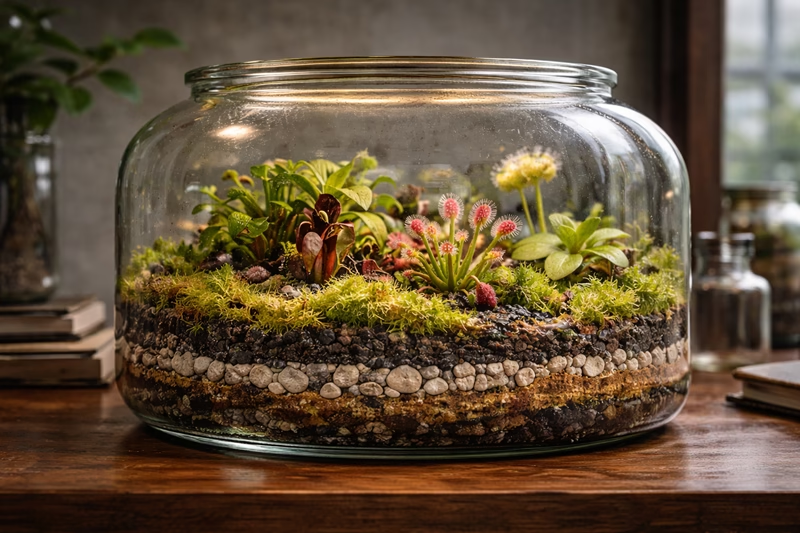
The Substrate Layer Where Most Terrariums Fail
Substrate chemistry determines lifespan.
Carnivorous plants evolved in nutrient-poor environments. Their roots expect scarcity. Rich soil burns them from below, slowly and invisibly.
A Proven Substrate Structure
Start with a drainage layer. Gravel or lava rock works well.
Above that, add a separation layer. Mesh or coarse sphagnum fibers prevent collapse.
The main substrate should remain inert and airy:
- Long-fiber sphagnum moss
- Silica sand
- Untreated peat moss
Avoid anything fertilized, composted, or mineral-rich. Never reuse soil from other plants. Never assume “organic” means safe.
This layer does not feed plants. It protects them.
Light as the Engine of Stability
Light is not just about growth. It governs moisture, color, and microbial balance.
Too little light invites algae and mold. Too much scorches leaves and dries traps. What works is steady, moderate intensity applied consistently.
Full-spectrum LED grow lights perform best. Run them ten to fourteen hours daily. Keep them close enough to energize growth but far enough to avoid heat buildup.
Plants communicate light stress early. Pale leaves, stretched growth, or deep red pigmentation all tell a story. The system stays stable when you listen before reacting.

Water Cycles Without Constant Intervention
Water choice matters more than water frequency.
Use distilled water, reverse osmosis water, or clean rainwater only. Minerals accumulate silently and permanently.
The substrate should remain damp, never flooded. Standing water suffocates roots and destabilizes microbes.
A functional terrarium recycles moisture through evaporation and condensation. If glass stays dripping wet all day, airflow is insufficient. If everything dries quickly, humidity is escaping too fast.
Balance lives between those extremes.
Feeding, Insects, and the Myth of Self-Feeding
Carnivorous plants are patient hunters.
They do not need schedules. They do not need help. Overfeeding is more dangerous than starvation.
In healthy terrariums, small insects appear naturally. Fungus gnats wander in, then vanish. This is enough. Introducing food manually often leads to mold, rot, and stalled growth.
Let the system decide when feeding happens. That restraint is what keeps it alive.
Preventing Mold Without Chemicals
Mold is information, not a crisis.
It usually signals low airflow, excess organic debris, or insufficient light. The fix is structural, not chemical.
Increase airflow slightly. Remove decaying material. Adjust lighting before reaching for sprays.
Fungicides disrupt the very balance you are trying to build. Once applied, recovery is slow and uncertain.
Scaling From Desktop Terrariums to Display Systems
Small terrariums stabilize quickly and fail quickly. Large terrariums change slowly and recover slowly.
As size increases, lighting distribution matters more. Air movement becomes essential. Plant spacing prevents competition and decay.
Reliable systems scale by repeating proven structures, not by experimenting at every layer.
FAQ: The Questions People Ask Themselves But Rarely Type
Will my plants survive without bugs?
Yes. Insects supplement nutrients but are not required in the short term.
How long can a terrarium really last?
Years, when substrate purity and light consistency are respected.
Do carnivorous plants need fertilizer?
No. Fertilizer is one of the fastest ways to kill them.
Will this attract pests into my home?
No. Healthy terrariums tend to reduce small insect populations rather than increase them.
Products / Tools / Resources
Use these search terms online to zero in on what you will need.
- Glass terrarium containers
Look for clear glass with ventilation gaps or removable lids. Avoid airtight jars. - Full-spectrum LED grow lights
Low-heat, adjustable lights with timers provide consistency without stress. - Long-fiber sphagnum moss
Essential for moisture retention and root aeration. Use untreated, high-quality moss. - Silica sand or horticultural sand
Adds drainage and prevents compaction in the substrate layer. - Distilled or reverse osmosis water source
Consistent water purity is non-negotiable for long-term success. - Mesh or substrate barrier fabric
Keeps layers intact and prevents substrate collapse over time.


