
If you’re looking to maximize your greenhouse gardening experience, whether with flowers or vegetables, there are plenty of ideas to explore! For veggies, focus on planting quick-growing varieties like radishes and lettuce, using organic fertilizers to boost growth, and considering staggered planting times for a continuous harvest. For flowers, mix perennials with annuals to ensure blooms throughout the year, and don’t forget to start seeds indoors to get a jump on the growing season. With a little planning and care, your greenhouse can be a vibrant space that yields plenty of fresh produce and beautiful flowers all year round!
Seasonal Flower Collections for Vibrant Displays
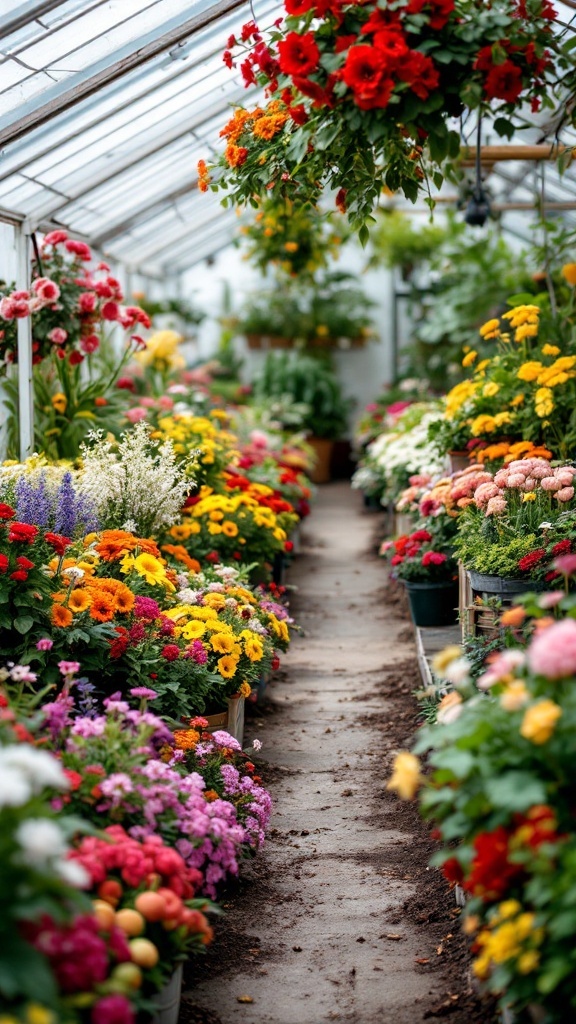
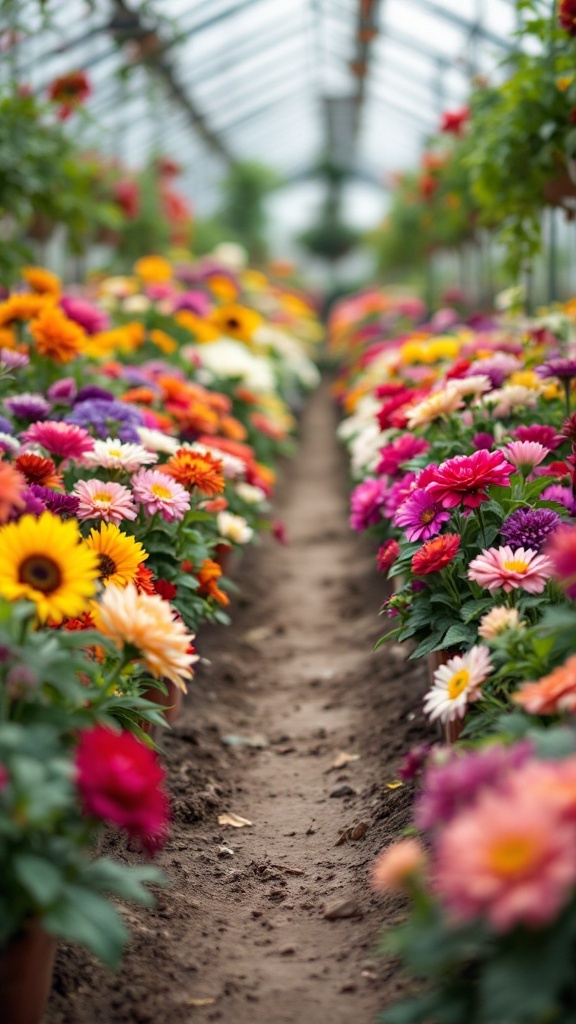
Imagine stepping into a greenhouse filled with a kaleidoscope of colors. This image captures the essence of what a vibrant flower greenhouse can look like. Lush rows of blooms, from cheerful yellows to deep reds and soft pinks, create a delightful atmosphere perfect for any gardening enthusiast.
When it comes to selecting flowers for your greenhouse, it’s essential to consider seasonal collections. You can plant spring favorites like pansies and tulips, which can thrive together, creating a lovely display as the weather warms up. As summer approaches, consider adding sunflowers and zinnias for a burst of color. These flowers not only look stunning but also attract pollinators, enhancing your greenhouse ecosystem. If you live in very cold climes, consider supplementing your greenhouse efforts with indoor hydroponic systems for the coldest times of the year.
Maximizing Space with Vertical Vegetable Gardening
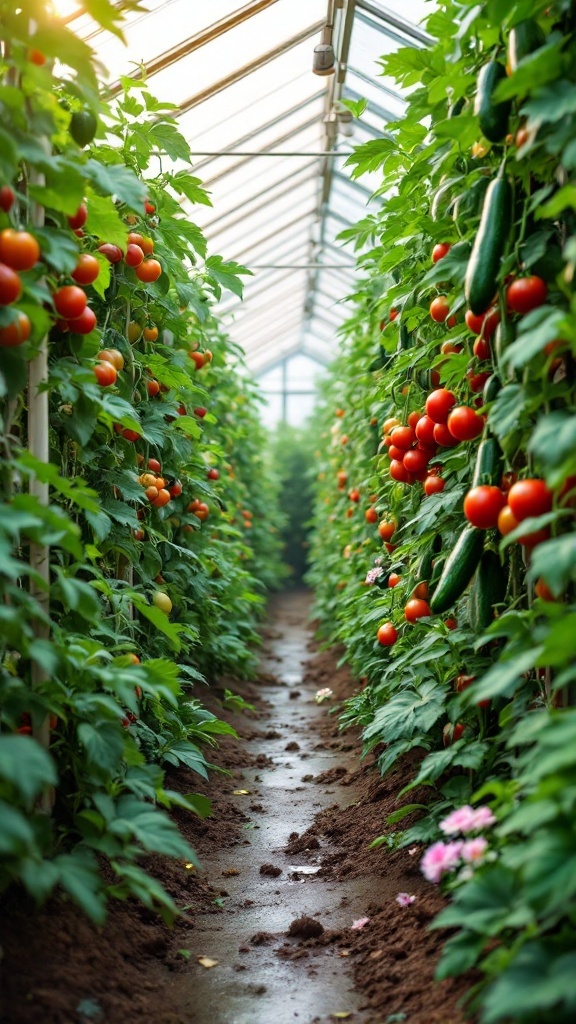
When it comes to greenhouse gardening, making the most of your space is key. This image beautifully captures a greenhouse filled with healthy tomato and cucumber plants, showcasing how vertical gardening can transform your growing area. By utilizing the vertical space, you can grow more crops while keeping the floor clear for easy access. Tomatoes thrive when supported by stakes or trellises, allowing them to climb, which not only saves space but also improves air circulation and light exposure. Cucumbers can be trained to grow vertically too, often resulting in healthier and more productive plants.
To get started, consider planting seeds in early spring. Tomatoes generally take about 60-85 days to mature, so timing is important. A complete fertilizer at planting can give your plants a good start, and you might want to use a balanced fertilizer every few weeks as they grow. Don’t forget to monitor the moisture levels; consistent watering is vital for these plants. As you plan your greenhouse, incorporating a mix of flowers alongside your veggies can add beauty and attract beneficial insects. Vibrant blooms can provide that year-round charm while your vegetables flourish.
Using Hydroponics for High-Yield Vegetables
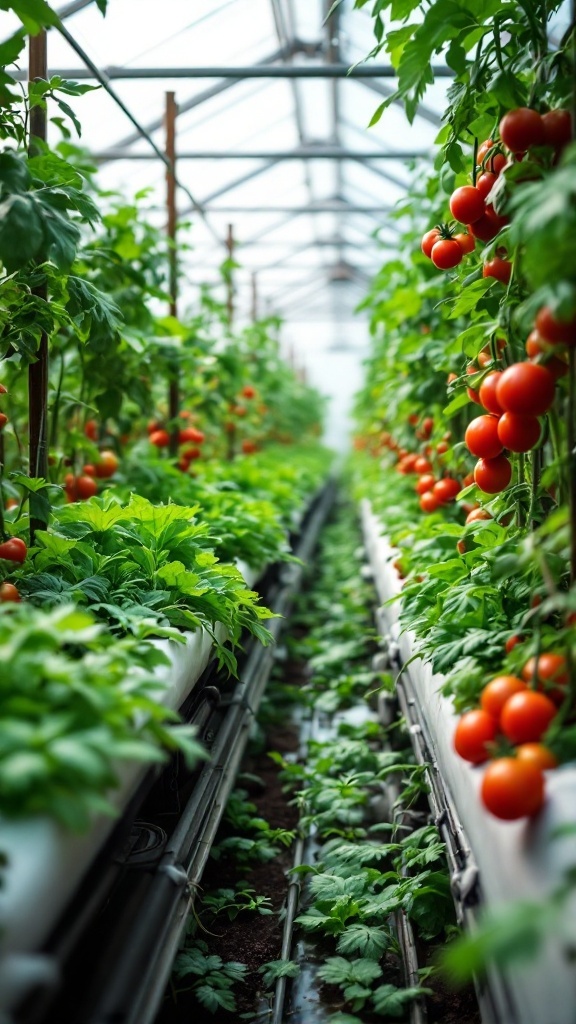
Hydroponics is a fantastic method for growing high-yield vegetables
in your greenhouse. This image showcases a vibrant greenhouse filled with lush green plants and clusters of ripe tomatoes. The setup allows for optimal growth conditions, making it easier to cultivate more veggies in less space.
When planning your hydroponic system, it’s essential to choose the right seeds. For tomatoes, opt for varieties like ‘Early Girl’ or ‘Roma’ that do well in hydroponic setups. Be sure to start seeds indoors about 6-8 weeks before your last frost date for the best results.
Fertilizer is another crucial component in hydroponics. Use a balanced nutrient solution specifically designed for hydroponic plants. This ensures your vegetables receive all the essential nutrients they need to thrive. Regularly monitor the nutrient levels in your system to keep your plants healthy.
Timing is key when planting. Ensure you plant your tomatoes when the temperatures are consistently above 60°F. This helps promote growth and fruiting. Hydroponically grown plants generally yield fruits quicker than those grown in soil, so you can enjoy a bountiful harvest sooner.
By choosing the right seeds, using a quality nutrient solution, and paying attention to planting times, you can maximize your vegetable production in a hydroponic greenhouse. This method not only saves space but also makes it easier to manage pests and diseases.
Incorporating Herbs for Culinary Use
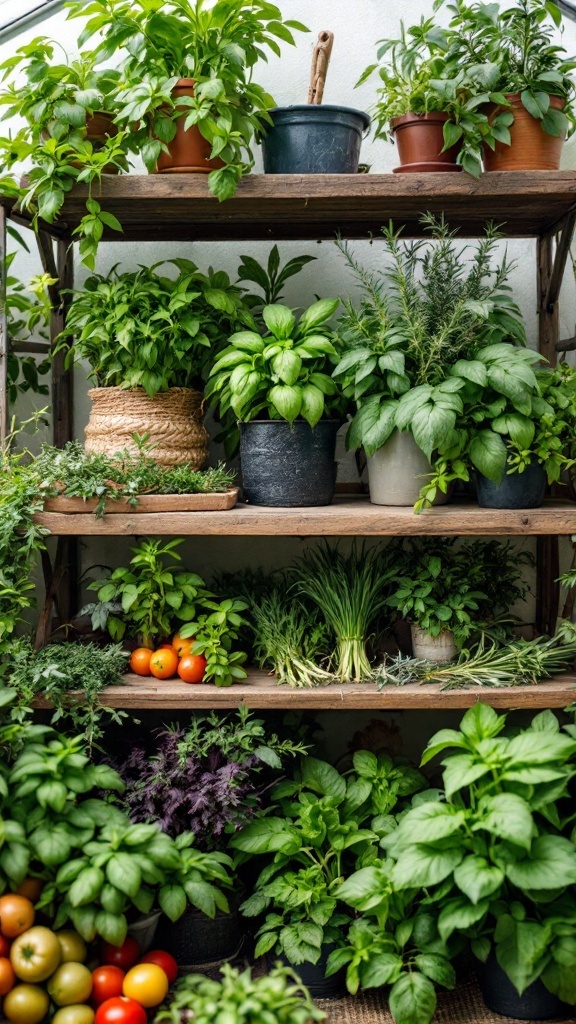
Imagine stepping into your greenhouse and being welcomed by a delightful array of herbs, lush and vibrant. This image shows a beautiful collection of herbs alongside some colorful tomatoes, showcasing just how easy it is to integrate culinary herbs into your greenhouse gardening. These herbs not only enhance your meals but also provide a sensory experience with their aromas and textures.
When planning your herb garden, consider starting with popular options like basil, thyme, rosemary, and parsley. These herbs are versatile and can be used in a variety of dishes, from pasta to salads. Plus, they thrive well in greenhouse conditions, where you can control the temperature and humidity to suit their needs.
For seeds, look for organic varieties that ensure healthy growth. Planting times can vary, but generally, you can sow most herbs in early spring or indoors during the winter months to get a head start. When planting, ensure you space them adequately to allow for their growth. Herbs like basil benefit from good light, so position them in a spot where they can soak up plenty of sunshine.
Fertilizer is essential for healthy herbs, but it’s important not to overdo it. A balanced, organic fertilizer works well, applied sparingly every few weeks during the growing season. Regular watering is key, but make sure the soil drains properly to prevent root rot.
To enjoy fresh herbs year-round, consider rotating your selections. This way, you can always have something on hand for your culinary adventures. Each harvest will not only enhance your cooking but will also bring a sense of satisfaction knowing you grew them right in your greenhouse.

Growing Succulents and Drought-Resistant Plants
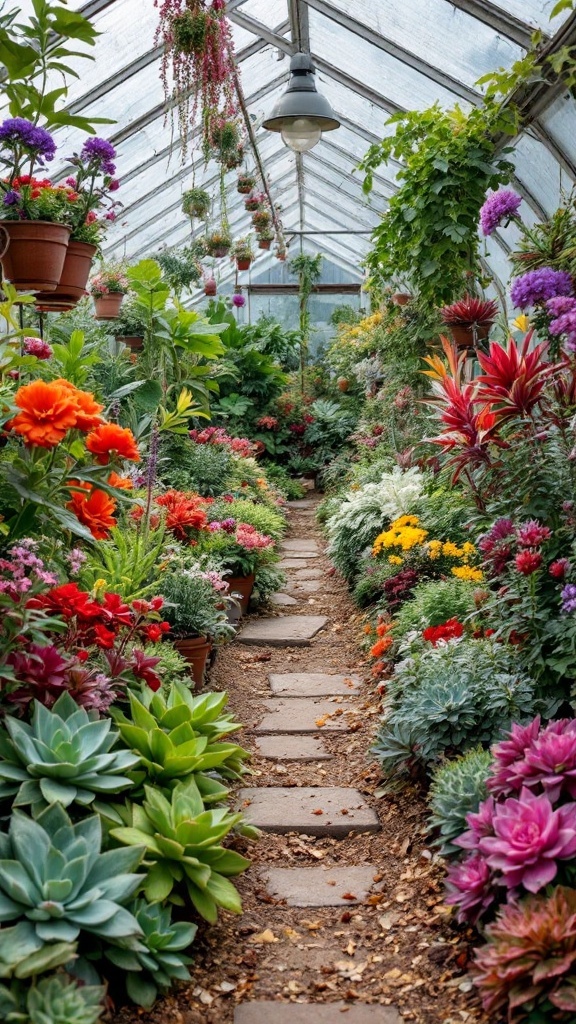
Greenhouses provide an ideal environment for growing a variety of plants, especially succulents and drought-resistant varieties. These plants thrive in controlled conditions, making them perfect for both novice and experienced gardeners. The image shows a vibrant greenhouse, filled with colorful flowers and lush greenery, showcasing how diverse your greenhouse can be.
When growing succulents, consider using well-draining soil and pots with drainage holes. This helps prevent overwatering, which succulents particularly dislike. For seeds, you can start with varieties like Echeveria or Sedum; they are easy to grow and adapt well to greenhouse life.
Fertilizing is simple: a diluted cactus fertilizer during the growing season will keep your succulents healthy. As for planting times, spring and early summer are optimal, allowing ample time for growth before the colder months.
Drought-resistant plants such as lavender and rosemary can also flourish in your greenhouse. They not only add beauty but can be harvested for culinary uses. Plant these in sandy or rocky soil for best results. Remember to provide plenty of light and ensure good air circulation to prevent mold and rot.
Incorporating a mix of succulents and drought-resistant plants can bring a unique charm to your greenhouse. Keep experimenting with different varieties to see which thrive best in your specific conditions!
Companion Planting for a Thriving Greenhouse
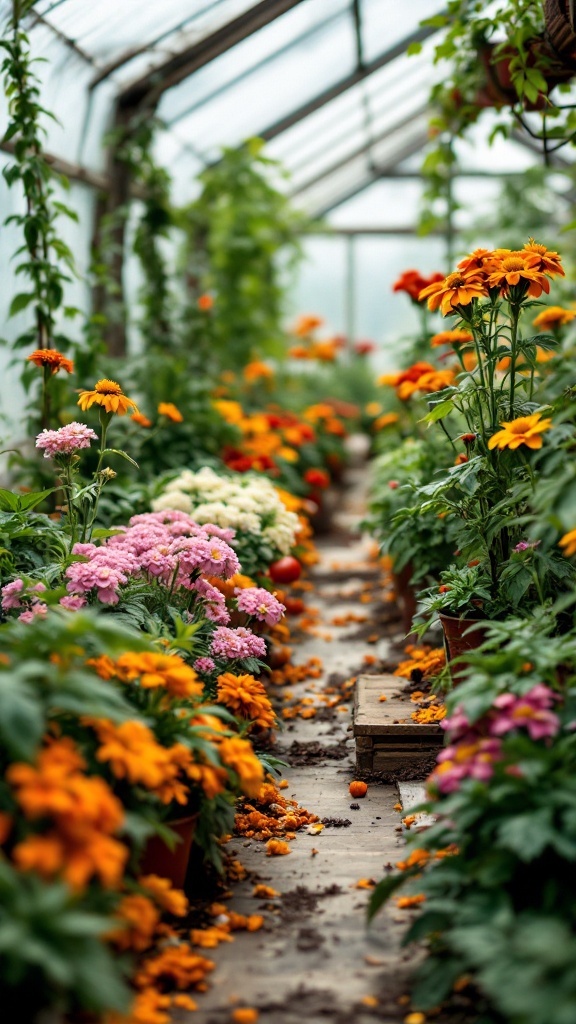
Companion planting is a fun and practical way to maximize the benefits of your greenhouse garden. In the image above, vibrant flowers like zinnias and marigolds line the pathway, creating a colorful environment. These lovely blooms not only brighten up the space but also attract beneficial insects that help pollinate your plants and keep pests at bay.
When planning your greenhouse layout, think about pairing flowers with vegetables. For example, planting marigolds alongside tomatoes can deter nematodes and other pests. Zinnias can attract pollinators that will benefit any nearby vegetable plants, ensuring a thriving garden.
Start by selecting seeds that thrive together. Look for flowers and vegetables that have similar light and water needs. For instance, basil grows well with tomatoes and can add flavor to your meals, while nasturtiums are beautiful and help repel aphids. Plant your seeds according to their ideal planting times; many vegetables can be sown directly into the soil in spring, while some flowers might need to be started indoors in early winter.
Don’t forget the importance of fertilizer! A balanced fertilizer can help both your flowers and vegetables flourish. Use organic options for a healthy growing environment. For best results, apply fertilizer before planting and again during the growing season based on the needs of your plants.
By using companion planting strategies, you can enjoy a beautiful and productive greenhouse all year round. Mix and match flowers and vegetables for both aesthetic and functional gardening!
Building a Pollinator-Friendly Greenhouse
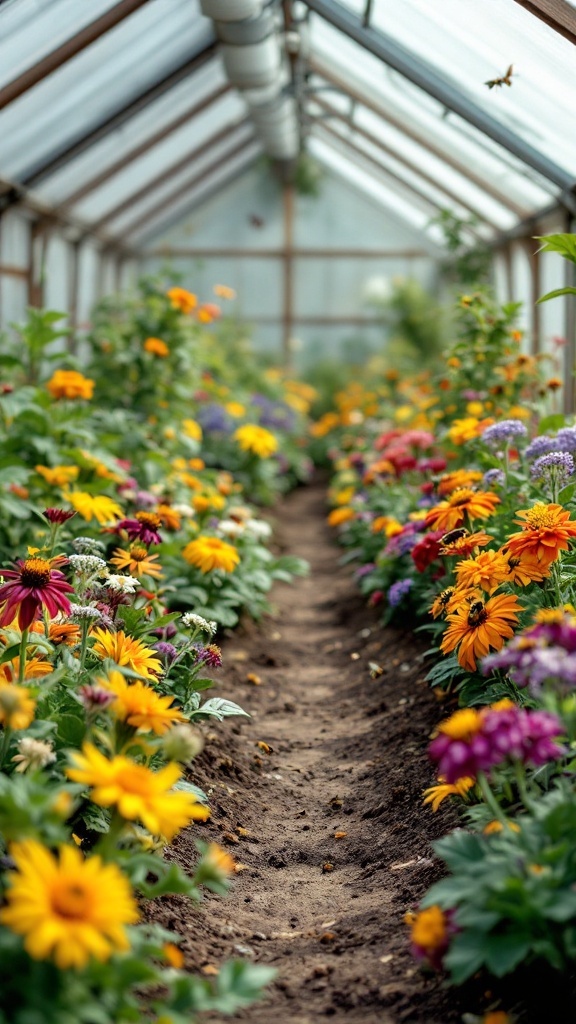
Creating a pollinator-friendly greenhouse is not just about aesthetics; it’s about supporting the ecosystem while enjoying the beauty of vibrant flowers. In the image, you can see a lovely greenhouse filled with colorful blooms, perfect for attracting bees and butterflies. The mix of flowers provides an inviting environment for these essential pollinators, which can enhance both your gardening experience and plant productivity.
To get started, choose a variety of flowering plants that bloom at different times throughout the year. This ensures that there’s always something in bloom, attracting pollinators during various seasons. Some good options to include are sunflowers, zinnias, and marigolds, which are known to attract a wide range of pollinators.
When planting, consider your seeds carefully. Start with organic seeds whenever possible, as they often provide healthier plants. You can sow the seeds directly into the soil or start them in seed trays for a head start. Remember to check the recommended planting times for your chosen flowers. Most seeds need to be sown in spring for summer blooms.
To keep your flowers thriving, use a balanced organic fertilizer, applying it once every four to six weeks during the growing season. This will ensure that your plants receive the nutrients they need to grow strong and healthy. And don’t forget about watering—consistent moisture is key, especially in a greenhouse setting.
Lastly, don’t hesitate to add some herbs to your greenhouse. Plants like lavender and mint not only attract pollinators but also add delightful scents and flavors to your gardening space. By making your greenhouse a haven for pollinators, you’ll enjoy a flourishing garden while doing your part for the environment.
Creating a Greenhouse Ecosystem with Beneficial Insects
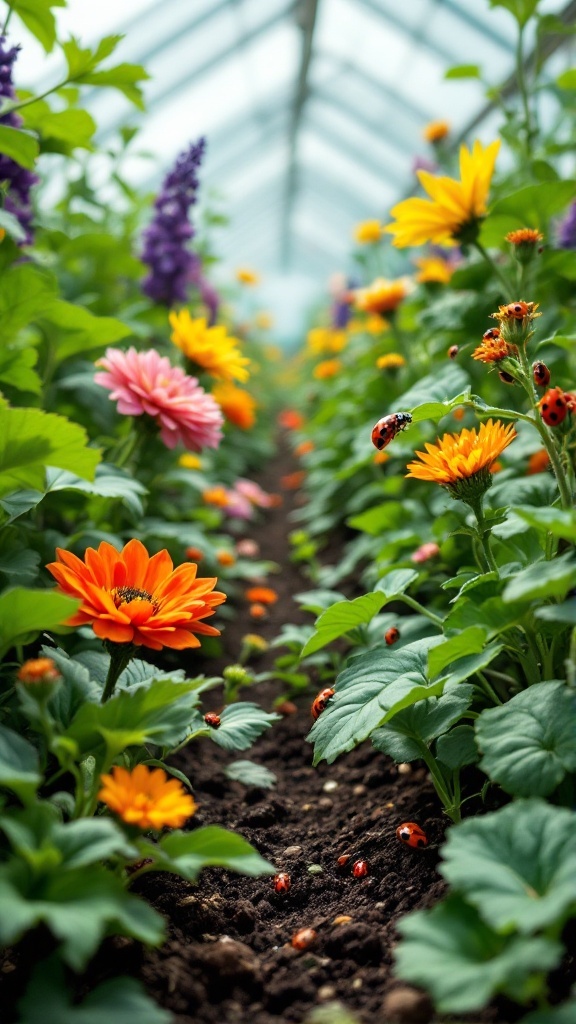
In a greenhouse filled with vibrant flowers like orange gerbera daisies and purple lupines, beneficial insects like ladybugs can thrive. These little helpers play a crucial role in the ecosystem. When you create an inviting atmosphere for both plants and insects, you’re on your way to a healthy greenhouse. Incorporating a variety of flowers ensures there’s something blooming year-round, providing nourishment for these beneficial insects. Consider adding a few vegetable plants among your flowers; they can attract even more pollinators and help with pest control. It’s all about balance!
Utilizing Container Gardening for Diverse Planting
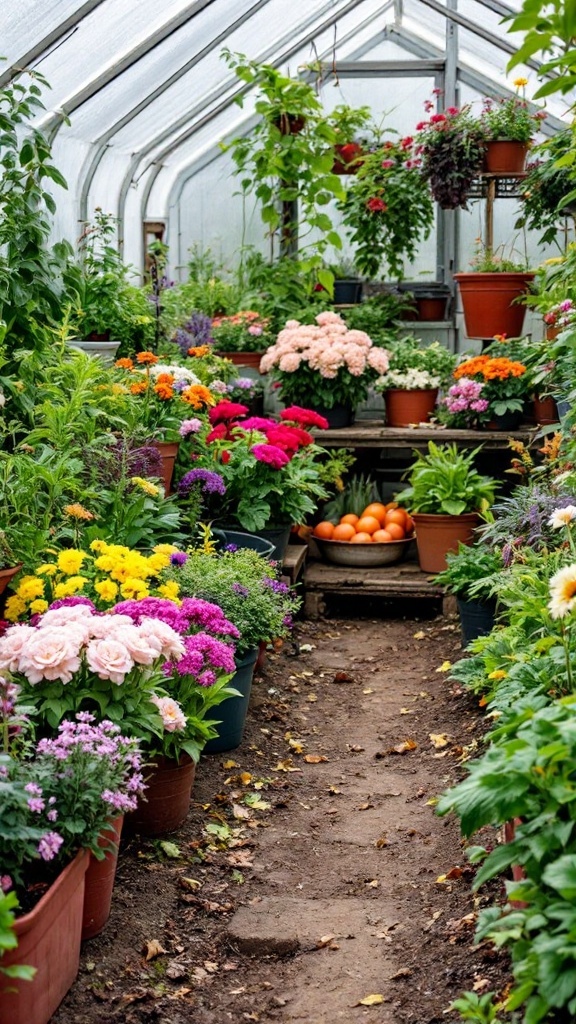
Container gardening in a greenhouse is a fantastic way to maximize your space while growing a variety of plants. In the image, you can see a vibrant mix of flowers and a few vegetables thriving in pots. This setup is not just visually appealing; it’s also practical for any gardener looking to make the most out of their greenhouse.
Growing flowers in containers allows for creativity in design and color. You can choose a range of species that bloom at different times, ensuring that your greenhouse looks lively throughout the year. For instance, combine pansies and petunias for early spring blooms, and follow with chrysanthemums and asters for fall color. This way, your greenhouse serves as a year-round visual delight.
When choosing vegetables, opt for compact varieties that thrive in pots. Tomatoes, peppers, and herbs do particularly well in containers. Make sure to select seeds that are suitable for your climate and the season. For instance, start your tomato seeds indoors about six to eight weeks before the last frost date, and transplant them into larger pots once they’re a few inches tall.
Fertilizing is key for container plants. Use a balanced, water-soluble fertilizer every few weeks to give your plants a nutrient boost. Always check the specific needs of your plants, as some may require more or less feeding.
Lastly, don’t forget about proper watering. Container plants can dry out quickly, especially in a greenhouse environment. Ensure to check the soil moisture regularly and water as needed. With a little attention, your greenhouse can become a thriving space for both flowers and vegetables.
Year-Round Vegetable Production Techniques
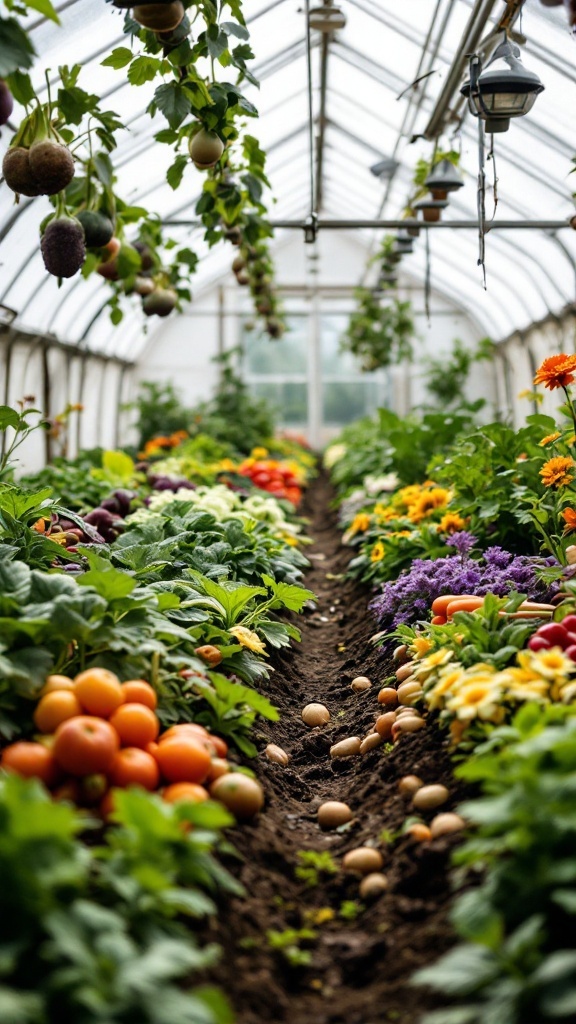
Having a greenhouse opens up a world of possibilities for growing vegetables all year. In the image, you can see a vibrant mix of vegetables and flowers thriving in a well-maintained greenhouse. This setup showcases how you can maximize space while enjoying a colorful and productive garden.
When it comes to year-round vegetable production, timing and planning are crucial. Start by selecting seeds that are suited for continuous growth, such as lettuce, spinach, and radishes. These can be sown every few weeks, ensuring fresh crops throughout the year.
Fertilizing your plants regularly helps them thrive. A balanced fertilizer can provide essential nutrients, but make sure to read the labels and follow the recommended application rates. Additionally, compost or organic matter can enrich the soil over time.
Consider the planting times based on your region. For instance, greens can be planted in cooler months, while tomatoes and peppers thrive in warmer conditions. Using a greenhouse allows you to control temperature and light, giving you the flexibility to experiment with different planting schedules.
Lastly, keep in mind the layout of your greenhouse. Grouping plants with similar water and light needs can make maintenance easier and more efficient. With a little planning, you can enjoy a continuous harvest of fresh vegetables and a splash of color from seasonal flowers.
Integrating Decorative Plants for Aesthetic Appeal
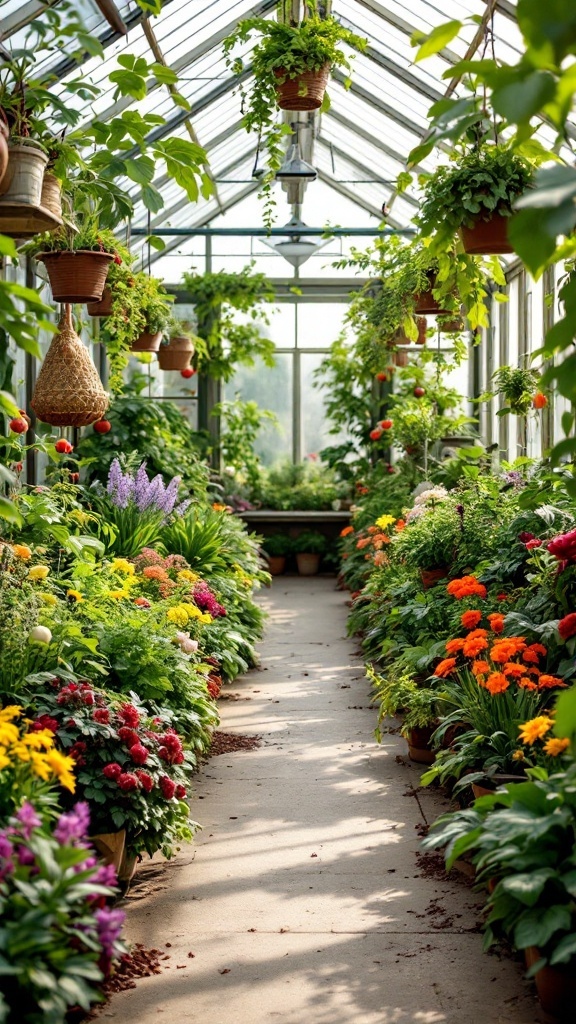
Creating a beautiful greenhouse is not just about growing vegetables; it’s also about integrating decorative plants that bring joy and color to the space. In the image, you can see a lush greenhouse filled with vibrant flowers and greenery. This setup not only enhances the aesthetics but also creates a relaxing environment where you can connect with nature.
When choosing decorative plants, consider incorporating a mix of annuals and perennials. For example, marigolds and zinnias offer bright blooms throughout the summer, while daisies and peonies can provide stunning visual interest in the spring. You can also add hanging planters like ferns or trailing vines to draw the eye upward and create a sense of depth.
Fertilizing your plants is essential for their health. A balanced, slow-release fertilizer can work wonders, especially if you apply it at the start of the growing season. For flowering plants, aim for a fertilizer higher in phosphorus to encourage blooming. Remember to follow the packaging instructions for the best results.
As for planting times, most flowers thrive when planted in the spring after the last frost. However, some hardy perennials can be planted in the fall to establish roots before winter. Don’t forget to check the specific needs of each plant type for optimal growth.
Creating a Year-Round Flowering Schedule
When it comes to greenhouse gardening, having a colorful display of flowers all year is totally doable for a country gal or guy. Imagine stepping into your greenhouse, surrounded by vibrant blooms that brighten up even the gloomiest of days. To get started, planning a flowering schedule is key. This means knowing when to plant different types of flowers to ensure continuous blooms.
First off, consider the different flower species that thrive in your area. Some flowers, like pansies and violas, bloom in cooler weather, while others, like marigolds and zinnias, love the heat. Be sure to check the seed packets for planting times; most will have guidelines tailored to your climate.
For a successful mix, start with early bloomers. Plant pansies and snapdragons in early spring, followed by summer staples like sunflowers and dahlias. As the seasons change, don’t forget to include fall favorites like asters and chrysanthemums. This way, you’ll have blooms from early spring through late fall.
Fertilization plays a huge role in keeping your flowers healthy and vibrant. A balanced fertilizer works well for most flowers, but you can adjust based on the specific needs of each type. For instance, roses benefit from a fertilizer higher in potassium. Always follow the instructions on the label for the best results.
Remember to keep an eye on watering. Flowers in a greenhouse may need more frequent watering, especially during warmer months. A drip irrigation system can help maintain moisture without overdoing it.
Finally, don’t forget about succession planting. As you harvest blooms, replant with new seeds to keep the cycle going. This technique ensures that you have flowers ready to take the spotlight even after the originals have faded. With a bit of planning and care, your greenhouse can be a year-round haven filled with delightful colors!

Pingback: 9 Creative DIY Greenhouse Ideas Perfect for Small Gardens - knowstuf